Click one of the buttons below to skip to the section you’d like to learn most about!
A Wire, Cable or Cable Assembly can meet the stated purchasing requirements and still create problems in production or in the field.
The issue is not always an incorrect alloy, diameter or construction. Problems can also result from inconsistent material properties, an incomplete specification, unsuitable packaging, poor application fit, inadequate documentation or manufacturing variation between orders.
These risks are easy to underestimate during sourcing because many do not become visible until the material enters a forming machine, welding operation, assembly cell or installed system. By that point, the original price difference between suppliers may be far less significant than the cost of downtime, inspection, rework or replacement.
For engineers, purchasers and quality teams, effective sourcing therefore requires more than confirming that a product meets a basic specification. It requires understanding which characteristics affect the application, how consistently they are controlled and what support is available when requirements extend beyond a standard product.
This guide examines eight common Wire and Cable sourcing mistakes, why they occur and what technical buyers can do to reduce the risk.

Eight Common Questions About Wire and Cable Sourcing
1. What are the most common mistakes companies make when selecting Wire products?
Five common mistakes are:
- Selecting material based primarily on price
- Assuming similar material grades will perform the same
- Failing to account for the application environment
- Overlooking tolerance and consistency requirements
- Waiting until a failure occurs to review supplier quality
These mistakes often happen because the product is evaluated as an isolated line item rather than as part of a manufacturing process or operating system. The correct Wire product should match the material requirements, production equipment, operating conditions and expected service performance.
2. Why can the cheapest Wire product cost more over time?
The purchase price represents only the initial cost.
A lower-priced product may increase the total cost if it creates additional inspection, slower production, equipment adjustments, rejected parts, downtime, installation problems or premature replacement.
The more critical the component is to production or field performance, the less useful unit price becomes as the only measure of value.
3. What do buyers most often overlook when sourcing industrial Wire?
One of the most frequently overlooked factors is consistency.
A Wire product may meet its minimum specification while still varying in diameter, tensile properties, surface condition, cast, helix, coating or package configuration. Those variations can affect forming, feeding, welding, spooling and installation.
The objective should not only be to receive acceptable material once. It should be to receive material that behaves predictably from one package, lot and order to the next.

4. Where do Welding Wire problems often begin?
Weld problems do not always begin at the weld joint.
They may begin with filler-metal selection, alloy chemistry, Wire diameter, surface cleanliness, storage, handling, packaging or compatibility with the selected welding process.
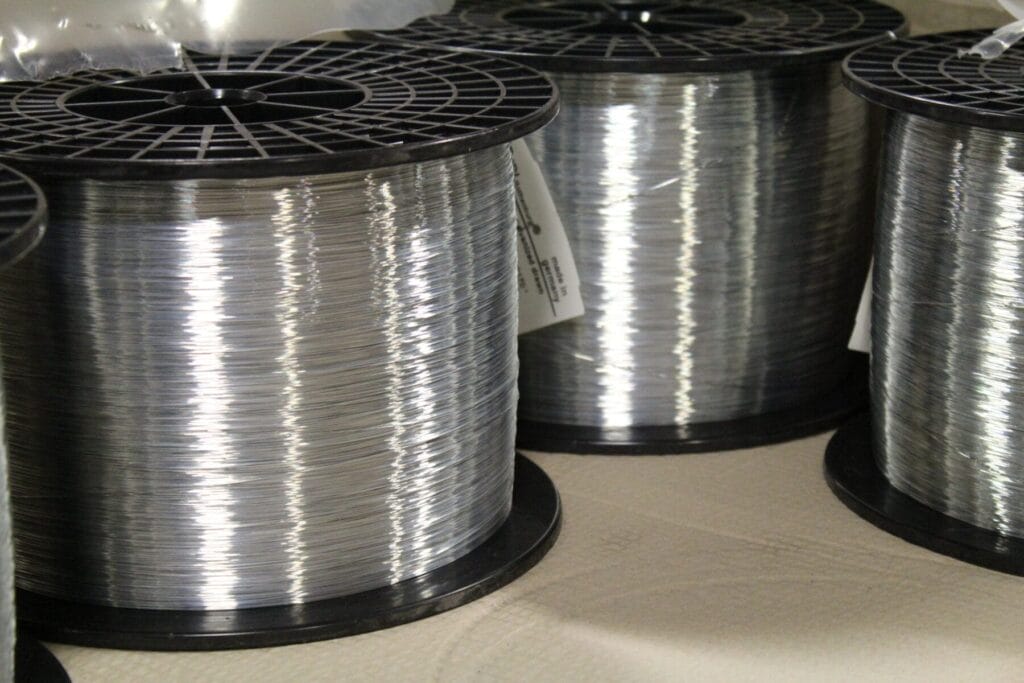
Central Wire manufactures Generation4™ Welding Wire for MIG, TIG and SAW processes. Its Welding Wire products are supplied with certificates of conformance covering physical and mechanical properties, including alloy chemistry, and each product receives a unique lot identification number for traceability.
5. Why is meeting the specification not always enough?
A specification establishes important requirements, but it may not capture every characteristic that affects production.
Two products may both meet the same broad standard while differing in tolerance control, surface quality, packaging, process stability, documentation or technical support.
The important question is not only whether the product passes inspection. It is whether it performs consistently in the customer’s process and application.
6. What are the hidden costs of inconsistent supply?
Inconsistent supply can create:
- Additional incoming inspection
- Production rescheduling
- Higher safety-stock requirements
- More frequent equipment adjustments
- Expedited freight
- Delayed customer orders
- Requalification work
- Increased administrative time
- Reduced confidence in future deliveries
Supply reliability includes more than delivering material on time. It also means delivering the expected product, documentation, packaging and performance each time.
7. Why do problems found after installation often begin upstream?
Installed performance is influenced by earlier decisions involving material, construction, environment, dimensions, loading, fittings and installation methods.
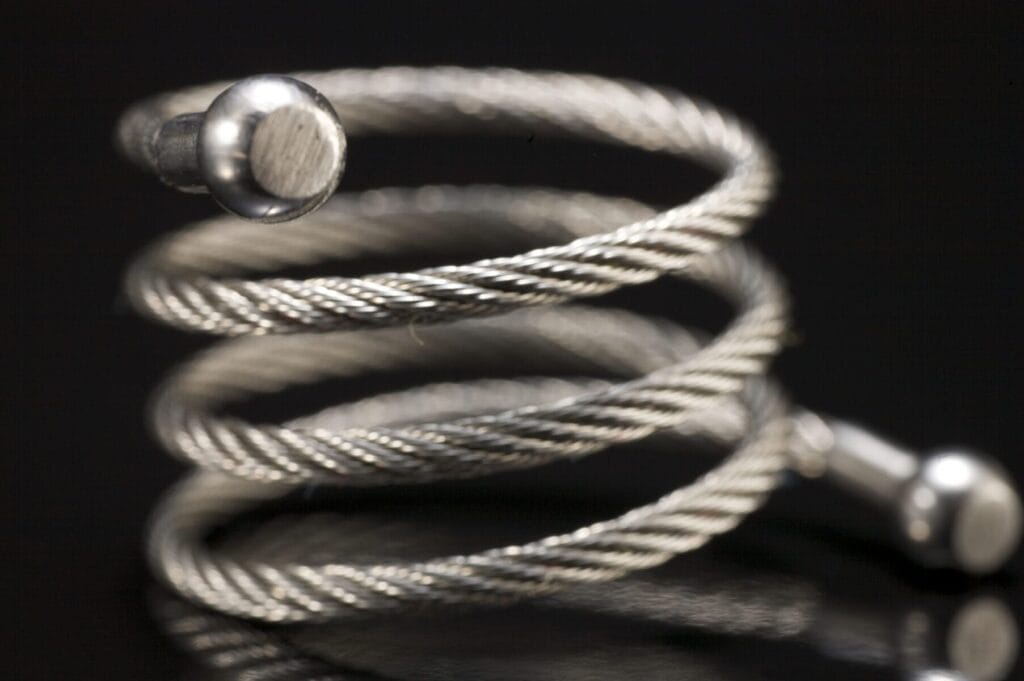
For Cable Assemblies, even the measurement reference point needs to be defined clearly. Loos & Co. identifies different standard points of measure for loops, hooks, stops, eyes, forks, studs and ball fittings. An assembly can therefore be manufactured to the stated numerical length and still be incorrect if the measurement points are not understood consistently.
8. What should be checked first when a Wire or Cable product fails?
Begin by reviewing the complete system rather than only the visible point of failure.
Examine:
- Material selection
- Product specification
- Production lot
- Application environment
- Loads and movement
- Surface condition
- Tolerance requirements
- Installation method
- Matching components
- Supplier consistency
- Maintenance history
- Any recent process changes
A failure is rarely explained by one observation alone. A structured investigation is required to separate the immediate failure point from the original cause.
Why Wire and Cable Sourcing Problems Are Difficult to Identify
Many sourcing problems remain hidden because industrial Wire and Cable are intermediate products.
They are purchased to become something else.
Spring Wire is formed into a finished spring. Welding Wire becomes part of a joint. Fine Wire may enter a medical, electrical or precision mechanical component. Cable may be coated, cut, tensioned or routed through a pulley. A Cable Assembly combines Cable, fittings, dimensions and termination methods into one finished system.
When a problem appears, it may therefore be unclear whether the original cause came from:
- The raw material
- The selected product
- The manufacturing process
- The customer’s production process
- The installation
- The operating environment
- A combination of several factors
This is why effective sourcing begins with the application rather than only the product description.
A purchase specification may identify grade, diameter and quantity. A useful manufacturing specification should also consider how the product will be processed, what conditions it will encounter and which characteristics are critical to acceptable performance.
Five Common Mistakes When Selecting Wire Products
Mistake 1: Selecting Wire Based Primarily on Price
Price is an important purchasing consideration. The mistake is treating it as though it is independent from performance and risk.
A quoted price may not reveal differences in:
- Material origin
- Alloy chemistry
- Diameter control
- Mechanical-property consistency
- Surface condition
- Testing
- Traceability
- Documentation
- Packaging
- Technical support
- Delivery reliability
The lowest purchase price may be appropriate when the application is well understood, the product is standardized and the consequences of variation are limited.
Price becomes a weaker decision metric when the Wire directly affects production speed, weld quality, fatigue performance, dimensional fit or a mission-critical application.
The buyer’s objective should be to purchase the level of control required by the application—not automatically the cheapest or most highly engineered option.
Mistake 2: Assuming Similar Material Grades Will Perform the Same
Material designations provide essential information, but an alloy name does not describe every characteristic of the finished Wire.
Products made from the same general grade may differ in:
- Temper
- Tensile range
- Diameter tolerance
- Surface finish
- Lubrication
- Heat-treatment history
- Straightness
- Cast and helix
- Coating
- Packaging configuration
Those differences may materially affect forming, feeding, joining or service performance.
This is especially relevant when replacing an established product with an alternative supplier. Matching the alloy and nominal diameter may not be sufficient if the original product’s surface, tensile properties or package configuration were contributing to successful processing.
Mistake 3: Ignoring the Application Environment
Wire and Cable materials need to be selected for the conditions they will actually encounter.
Important environmental factors may include:
- Temperature
- Moisture
- Saltwater
- Chemicals
- Abrasion
- Vibration
- Repeated bending
- Electrical exposure
- Cleanliness requirements
- Indoor or outdoor installation
A Cable intended for a dry, static indoor application may require a very different material and construction than one exposed to saltwater, chemical processing or continuous movement.
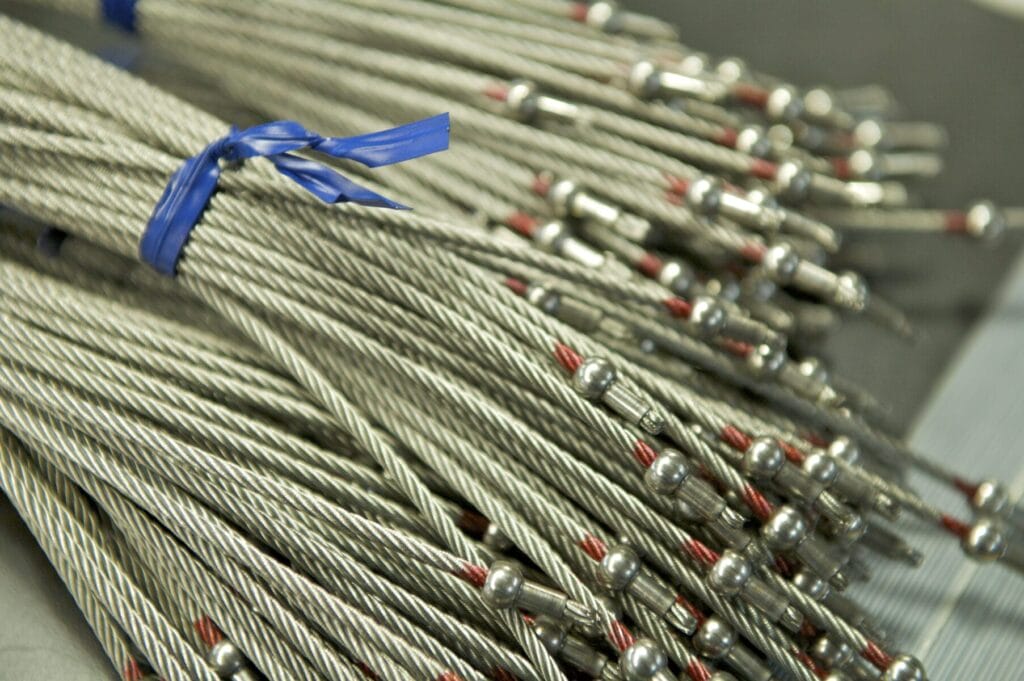
Coated Cable provides a useful example. Loos & Co. applies extruded plastic jackets to Aircraft Cable and Wire Rope to add protection and support performance in demanding environments. Available options include Stainless and Galvanized Steel Cable with commonly used Nylon and Vinyl coatings. The jacket contributes to abrasion protection and environmental resistance, but the underlying Cable material and construction must still be selected for the application.
Mistake 4: Overlooking Tolerances and Consistency
A nominal dimension does not describe the full allowable range.
When a product is used in automated equipment or a close-fitting assembly, relatively small dimensional changes can affect:
- Feed performance
- Tooling setup
- Formed dimensions
- Coating fit
- Pulley compatibility
- Assembly length
- Installation effort
- Finished-part acceptance
Tighter tolerances are not automatically better. They may require slower production, additional processing and more inspection.
Loos & Co.’s published Cable Assembly guidance notes that standard length tolerances generally allow faster production and lower cost, while closer tolerances may be available after the specific requirement and inspection method are reviewed.
The requirement should therefore be tight enough to protect the application without adding controls that do not create meaningful value.
Mistake 5: Waiting for Failure Before Reviewing Supplier Quality
Supplier quality should be evaluated before a significant production or field issue occurs.
A proactive review may consider:
- Certification status
- Material-verification practices
- In-process inspection
- Testing capabilities
- Lot identification
- Corrective-action procedures
- Change control
- Technical expertise
- Production capacity
- Packaging control
- Supply continuity
Central Wire’s manufacturing capabilities include rod preparation, drawing, heat treatment, cleaning, coating, straightening, grinding, testing and packaging. Its technical personnel also support PPAP preparation, application recommendations, process improvement, metallurgical analysis and root-cause identification.
The value of this information is not limited to supplier approval. It helps buyers understand which variables are being controlled before the finished product is shipped.
The True Cost of a Lower-Priced Wire or Cable
The total cost of an industrial product extends beyond the purchase order.
A useful cost evaluation should include four categories.
1. Acquisition Cost
This includes:
- Unit price
- Freight
- Duties
- Minimum order quantities
- Payment terms
- Inventory carrying cost
These costs are easy to identify because they appear directly in purchasing records.
2. Processing Cost
Processing cost includes the labour and equipment required to use the material.
Inconsistent Wire may require slower machine speeds, more setup time or additional operator attention. Cable that does not dispense correctly may require manual handling. Variable coating thickness may create fit problems. Incomplete documentation may hold material in incoming inspection.
These costs are less visible because they are often absorbed into normal operations.
3. Cost of Nonconformance
- ncoming material
- Scrap
- Reworked components
- Sorting
- Additional testing
- Line stoppages
- Corrective-action investigations
- Supplier returns
A small initial saving can disappear after one interrupted production run.
4. Field and Customer Cost
The highest costs may appear after the finished product has shipped.
They can include:
- Installation delays
- Warranty claims
- Field service
- Replacement labour
- Customer penalties
- Product recalls
- Damage to customer confidence
The correct comparison is therefore not simply Supplier A’s price against Supplier B’s price. It is the expected total cost of using each product successfully.
Why Consistency Is One of the Most Overlooked Sourcing Requirements
Buyers often focus on whether a product meets specification. Production teams experience whether it behaves consistently.
Those are related, but they are not identical.
A product may remain inside its allowable specification while moving between the upper and lower limits of that range. Whether that variation matters depends on the application.
Dimensional Consistency
Diameter variation may affect forming tools, feed rolls, guides, dies, pulleys and mating components.
For Shaped Wire or precision products, profile dimensions and edge conditions may also affect fit and contact area.
Mechanical Consistency
Variation in tensile strength, elongation or hardness can affect forming behaviour and finished-part dimensions.
Material at one end of an acceptable tensile range may respond differently from material near the opposite end.
Surface Consistency
Surface finish, residual lubricant, cleanliness and coating condition may influence:
- Friction
- Feeding
- Forming
- Welding
- Bonding
- Corrosion behaviour
- Appearance
Package Consistency
Spool dimensions, winding pattern, package weight and payoff behaviour can influence equipment efficiency even when the Wire itself meets specification.
Central Wire offers Welding Wire in multiple packaging configurations designed around different application requirements. This illustrates why packaging should be treated as part of the production system rather than merely a shipping container.
Lot-to-Lot Consistency
A successful first order does not establish long-term reliability.
Supplier performance should be evaluated across multiple orders, including:
- Product measurements
- Documentation
- Delivery
- Packaging
- Corrective-action response
- Communication about process or material changes
The sourcing goal is repeatable performance, not one acceptable shipment.
Where Welding Problems Often Begin
When a weld fails, attention naturally moves to the visible joint.
That is necessary, but it is not always where the original problem began.
Potential upstream factors include:
- Incorrect filler-metal selection
- Incompatible base and filler materials
- Wire chemistry
- Diameter variation
- Surface contamination
- Rust or oxidation
- Poor storage
- Moisture exposure
- Damaged packaging
- Feed problems
- Incorrect shielding gas
- Unsuitable voltage or amperage
- Joint preparation
Central Wire identifies joint style, filler material and welding process as key inputs when establishing a Welding procedure. Its recommended procedure information also addresses voltage, amperage and shielding atmosphere for Generation4™ Stainless Steel and Nickel Welding Wire.
Material Selection
The filler metal must be compatible with the base materials, joint design, service conditions and required weld properties.
Selecting by a familiar alloy name without reviewing the complete application can introduce problems involving corrosion, cracking, temperature resistance or mechanical performance.
Surface Condition
Contamination can enter the process through the Wire, base material, handling equipment or storage environment.
A Wire product that has been exposed to unsuitable conditions may create weld-quality problems even if its original chemistry was correct.
Feeding and Packaging
Inconsistent feeding can affect arc stability and deposition.
Wire diameter, surface condition, cast, helix and package winding can influence how the product moves through the system.
Traceability
When a problem occurs, lot identification and documentation help connect the Welding Wire to its material chemistry, manufacturing history and inspection results.
Traceability does not prevent every failure, but it improves the ability to investigate one accurately.
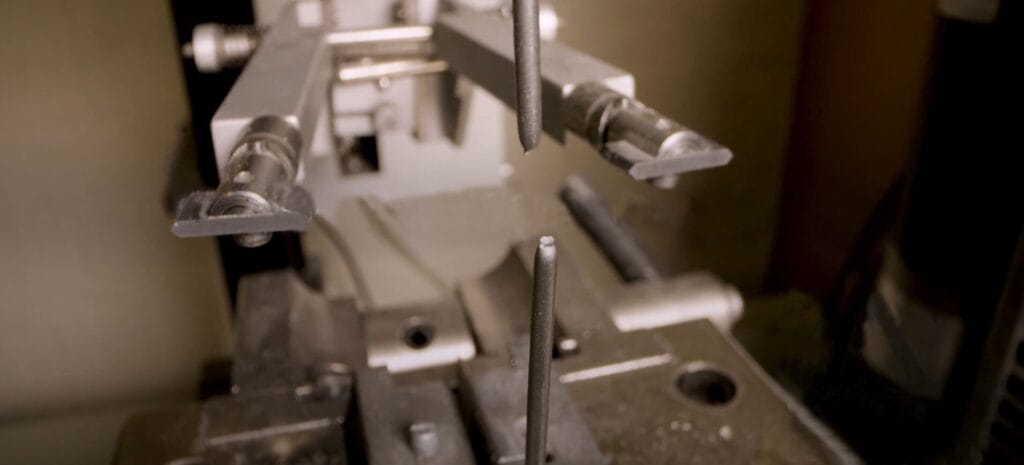
Why “Meeting Spec” May Not Be Enough
Specifications are essential. They create a shared definition of the product and establish acceptance requirements.
The mistake is assuming that every relevant application requirement is already represented in the specification.
A specification may define:
- Alloy
- Diameter
- Construction
- Minimum strength
- Coating
- Length
- Applicable standard
It may not adequately define:
- The preferred tensile range inside the allowed limits
- Surface lubrication
- Cast and helix
- Cleanliness
- Package size
- Payoff direction
- Measurement reference points
- Inspection method
- Documentation format
- Expected fatigue conditions
- Compatibility with downstream equipment
Compliance Versus Process Capability
Compliance asks whether the inspected product falls inside the allowable limits.
Process capability asks whether the manufacturing process can continue producing within those limits consistently.
For repeat orders and high-volume manufacturing, process stability may be as important as the result from an individual inspection.
Standard Requirements Versus Application Requirements
A recognized standard provides an important technical baseline.
The application may still require additional controls due to:
- Automated processing
- High cycle counts
- Harsh environments
- Tight assembly interfaces
- Mission-critical performance
- Regulatory documentation
- Customer-specific approval requirements
Central Wire’s quality operations list testing capabilities that include tensile, torsion, cold-bend, coiling, wrap, hardness, metallography, corrosion, coating-weight and electrical-resistance testing under applicable ASTM and ISO/EN methods.
The required tests should be selected according to the actual product and risk—not simply added without a defined purpose.
The Hidden Cost of Inconsistent Supply
Supplier consistency includes product quality, but it also extends to the entire purchasing relationship.
Variable Lead Times
Unreliable lead times force customers to carry more inventory or accept greater scheduling risk.
Changing Documentation
Missing or inconsistent certifications can delay material release, even when the physical product is acceptable.
Packaging Changes
A change in spool, reel, coil or assembly packaging may affect storage, material handling or production equipment.
Uncommunicated Process Changes
A manufacturing change that does not alter the basic product description may still affect how the material behaves.
Change communication is especially important when the customer has validated a particular combination of material, process and packaging.
Inconsistent Technical Response
When a problem occurs, customers need timely access to people who can review specifications, test data, application conditions and manufacturing history.
A supplier relationship becomes more valuable when it reduces uncertainty rather than transferring it to the customer.
What Goes Wrong After Installation—and Why It Matters Upstream
Some problems are not visible during incoming inspection or initial production.
They appear only after the product has been loaded, cycled or exposed to its operating environment.
Premature Wear
Wear may be connected to surface contact, abrasion, alignment, pulley geometry, lubrication or an unsuitable Cable construction.
Fatigue
Repeated bending can damage a product even when the applied load remains below its minimum breaking strength.
For Wire Rope and Aircraft Cable, the relationship between Cable diameter and pulley or drum size influences service life. Loos & Co. advises that larger drum or pulley sizes relative to the Wire diameter generally support longer service life.
Corrosion
Corrosion may indicate that the selected material, coating or environmental protection was not appropriate for the service conditions.
Coating Failure
A coating problem may involve material compatibility, abrasion, chemical exposure, temperature, installation damage or an incorrect outside-diameter requirement.
Tension Loss or Stretch
Cable systems may experience different forms of stretch.
Loos & Co. provides technical guidance for estimating elastic stretch based on load, Cable diameter, construction and material. This demonstrates why a finished Cable system cannot always be evaluated by unloaded length alone.
Fit and Length Problems
A Cable Assembly’s finished dimensions depend on:
- The defined measurement points
- Fitting geometry
- Cable construction
- Manufacturing tolerance
- Loading condition
- Installation method
A dimension without a clear reference point can create disagreement even when both parties believe they followed the drawing.

If a Product Fails, Check the Full Chain
A useful failure investigation should move through the product chronologically.
- Confirm the Original Requirement
Review:
- Drawing revision
- Purchase specification
- Applicable standards
- Approved deviations
- Inspection requirements
- Intended application
The investigation should be based on the requirement in effect when the product was manufactured.
- Identifythe Product and Lot
Confirm:
- Supplier
- Purchase order
- Lot or heat number
- Package identification
- Material certification
- Production date
- Other products made from the same lot
This determines whether the issue is isolated or potentially affects additional material.
- Preserve the Evidence
Avoid cleaning, straightening, cutting or altering the failed material before the condition has been documented.
Record:
- Photographs
- Failure location
- Orientation
- Surface condition
- Installed configuration
- Nearby components
- Environmental exposure
- Examine the Application
Review:
- Actual load
- Expected load
- Repeated movement
- Temperature
- Chemicals
- Moisture
- Pulley or guide dimensions
- Alignment
- Installation tension
- Maintenance practices
The real operating conditions may differ from those assumed during product selection.
- Review Manufacturing and Inspection Records
Relevant records may include:
- Material chemistry
- Mechanical-test results
- Dimensional inspection
- Heat-treatment records
- Coating data
- Assembly measurements
- Proof-load results
- Process deviations
- Separate the Failure Point From the Root Cause
The place where a product breaks is not automatically where the problem began.
For example, a Cable may fail near a fitting, but the contributing factor could involve:
- Incorrect fitting selection
- Improper swaging
- Repeated bending at the termination
- Misalignment
- Corrosion
- Overload
- Assembly geometry
- Verify the Corrective Action
A corrective action should address the identified cause and then be validated.
Changing the material without confirming the cause may simply move the problem elsewhere.
Standard Products Versus Custom Manufacturing
Not every sourcing problem requires a custom product.
A standard product is often the best choice when established material, dimensional and performance requirements already match the application.
Custom manufacturing may become appropriate when performance depends on:
- A nonstandard alloy
- Tighter dimensional control
- A specific tensile range
- A controlled surface finish
- Special cleaning or coating
- A custom Wire profile
- A specialized Cable construction
- Unique fittings
- Close finished-length requirements
- Application-specific testing
- Customer-defined packaging
- Detailed traceability
For Cable Assemblies, custom requirements may involve Cable material, coating, fittings, cut length, termination and final measurement. Loos & Co. manufactures custom assemblies in a range of materials and sizes, supported by inventories of bare and coated Cable, hardware and fittings.
The decision should be driven by a defined functional need.
Customizing characteristics that do not affect performance may add cost without reducing risk. Failing to customize a critical characteristic may create repeated production or field issues.
How to Evaluate a Wire, Cable or Cable Assembly Supplier
A supplier evaluation should establish whether the manufacturer can support both the stated product and the way it will be used.
Material Control
- How is incoming raw material verified?
- Is heat or lot traceability maintained?
- Are material certifications available?
- How are substitutions or material changes controlled?
Manufacturing Capability
- Which processes are completed internally?
- Which processes are outsourced?
- Can the supplier maintain the required dimensions and mechanical properties?
- Can standard and custom requirements be supported?
Process Control
- Which characteristics are inspected during production?
- How are tooling wear and equipment condition monitored?
- How are nonconforming conditions contained?
- How is repeatability measured between lots?
Testing
- Which destructive and non-destructive tests are available?
- Which standards govern the testing?
- Can application-specific tests be developed?
- Are inspection methods agreed upon before production?
Loos & Co. identifies both destructive and non-destructive testing capabilities within its quality program, while its manufacturing locations support certified Aerospace, Military and other controlled applications.
Documentation
- What appears on the certificate of conformance?
- Are chemistry and mechanical properties reported?
- How are revisions controlled?
- Can documentation be connected to the shipped lot?
Packaging
- Which package types are available?
- Can spool size, weight and winding be matched to the customer’s equipment?
- How is material protected during transportation and storage?
- Will packaging remain consistent across repeat orders?
Technical Support
- Can the supplier review the application before quoting?
- Are metallurgical and process specialists available?
- Can the supplier support root-cause analysis?
- Can prototypes or trial quantities be produced?
Twelve Questions Buyers Should Ask Before Placing an Order
- What characteristics beyond alloy and diameter affect this application?
- Is the specification complete enough to define the required performance?
- Which tolerances are functionally necessary?
- How will the material be formed, welded, coated, assembled or installed?
- What environmental conditions will the product encounter?
- Which material properties must remain consistent between lots?
- What testing and documentation are required?
- How should the Wire, Cable or Assembly be packaged?
- Are measurement reference points clearly defined?
- Does the supplier understand the downstream process?
- How will manufacturing or material changes be communicated?
- What support is available if a production or field issue occurs?
These questions help move the sourcing discussion from basic product availability to application fit and repeatable performance.
How the Central Wire Group of Companies Supports Better Sourcing Decisions
Across its Wire and Rope & Assemblies operations, the Central Wire Group of Companies supports manufacturing processes that extend from Wire drawing, heat treatment and surface processing to Cable, Wire Rope, fittings and finished Cable Assemblies.
Central Wire’s technical capabilities include application recommendations, PPAP support, process improvement, metallurgical analysis and root-cause identification. Its testing resources support multiple mechanical, metallurgical, corrosion and electrical evaluations.
Loos & Co., the Group’s Rope & Assemblies Division, manufactures products that include Aircraft Cable, Wire Rope, Coated Cable, hardware, fittings and custom Cable Assemblies. Its technical resources also address Cable properties, bend radius, stretch, assembly measurement and dimensional tolerances.
The value of these combined capabilities is not simply a larger product range. It is the ability to consider how material selection, Wire properties, Cable construction, fittings, manufacturing tolerances, testing and final application interact.
Final Takeaway
The most expensive Wire or Cable problem is rarely the one identified before the order is placed. It is the one discovered after material has entered production, been installed or reached the customer.
Many of those problems can be reduced by avoiding a small number of common sourcing mistakes:
- Selecting by price without considering total cost
- Treating similar grades as interchangeable
- Ignoring the operating environment
- Underestimating tolerance and consistency requirements
- Accepting specification compliance as the only measure of performance
- Failing to define packaging and documentation
- Overlooking supplier reliability
- Investigating only the visible point of failure
Better sourcing begins by connecting the product to its process and application. When buyers, engineers, quality teams and manufacturers establish those connections early, they can develop clearer specifications, make stronger supplier comparisons and reduce the likelihood that an upstream decision becomes a downstream failure.