Click one of the buttons below to skip to the section you’d like to learn most about!
Wire and Cable products rarely perform in isolation.
They become part of a spring, welded structure, control system, filtration unit, heating element, downhole tool, conveyor, medical device or finished Cable Assembly. Although the Wire itself may be difficult to see once the system is complete, its material properties, construction and manufacturing consistency can directly affect how that system performs.
This is why industrial product selection should begin with the application rather than the product name.
A Wire product that performs reliably in a controlled indoor environment may not provide the same results when exposed to saltwater, chemicals, pressure, heat or repeated movement. Similarly, a Cable construction suitable for a static load may not be appropriate for continuous travel over a pulley.
For engineers, purchasers and quality departments, the central question is therefore not simply:
“Which Wire product meets the specification?”
It is:
“Which combination of material, properties, construction and manufacturing controls will perform reliably under the actual operating conditions?”
This guide examines where Wire, Cable and Cable Assemblies appear in real-world industrial systems, what different sectors require from these products and how technical teams can connect product selection to the application.
Eight Common Questions About Industrial Wire and Cable Applications
1. Where are industrial Wire and Cable products used?
Industrial Wire, Cable and Cable Assemblies are used in applications involving:
- Load carrying
- Motion control
- Filtration and separation
- Welding and fabrication
- Spring action
- Resistance heating
- Downhole measurement
- Material conveying
- Safety restraint
- Medical-device operation
- Structural support
- Fastener production
- Precision forming
Examples include flight-control Cable Assemblies, oil and gas Slicklines, Welding Wire, Knitted Wire Mesh, conveyor Cable, Resistance Wire heating elements, Spring Wire and precision medical Wire.
Central Wire’s product range includes Fine Wire, Knitted Wire Mesh, Resistance Wire, Shaped Wire, Slicklines, Spring Wire, Welding Wire, Cold Heading Wire and specialty bar products. Loos & Co.’s Rope & Assemblies capabilities include Aircraft Cable, Wire Rope, Coated Cable, Cable Assemblies, Medical Wire and Strand, CNC Machining, pulleys, sheaves and related hardware.
2. What role does Wire play in a high-performance industrial system?
The role depends on the system.
Wire may:
- Carry or control a load
- Transfer mechanical movement
- Return a component to its original position
- Produce heat through electrical resistance
- Join two base materials
- Separate liquid from gas
- Maintain the geometry of a filtration screen
- Transmit information into a well
- Form a fastener or precision component
The Wire is often one element of a larger mechanical or manufacturing process. Its performance must therefore be evaluated in relation to nearby components, equipment, loads and environmental conditions.
3. What do different industries require from their Wire suppliers?
Requirements vary significantly by industry.
Aerospace applications may emphasize traceability, approved specifications, dimensional control and repeatable movement. Oil and gas applications may prioritize corrosion resistance, strength, long lengths and performance under pressure. Food and beverage processing may require cleanable materials, filtration performance and resistance to temperature changes. Marine environments may require resistance to moisture, saltwater and weather exposure.
The product description may be similar, but the performance priorities are not.
4. What is the difference between general-purpose and application-specific Wire?
General-purpose Wire is produced to established material, dimensional and mechanical requirements that suit a broad range of uses.
Application-specific Wire includes additional controls selected for a particular operating condition or manufacturing process. These may involve:
- A particular alloy
- Tighter tolerances
- A controlled tensile range
- A specialized surface finish
- A coating or lubricant
- A custom profile
- A specific Cable construction
- Customer-defined packaging
- Additional testing or documentation
Application-specific does not always mean completely custom. It means the important product characteristics have been selected around the intended use.
5. Why can a product work in one industry but fail in another?
Different applications expose products to different combinations of load, motion, corrosion, heat, chemicals, vibration, pressure and wear.
A material selected for strength may not provide adequate corrosion resistance. A flexible Cable may perform well over a large pulley but fatigue prematurely when routed through a smaller bending radius. A coating that provides abrasion protection in one environment may be unsuitable for another chemical or temperature condition.
The operating environment changes which product characteristics become most important.
6. How should products be matched to real-world conditions?
Product selection should begin by defining:
- What the product must do
- Where it will operate
- What loads and movement it will experience
- Which materials or chemicals it will contact
- How it will be manufactured or installed
- Which dimensions and properties are critical
- What inspection and documentation are required
The better these factors are understood before manufacturing begins, the more accurately the product can be matched to the application.
7. How are Wire products used in Oil & Gas, fabrication and processing?
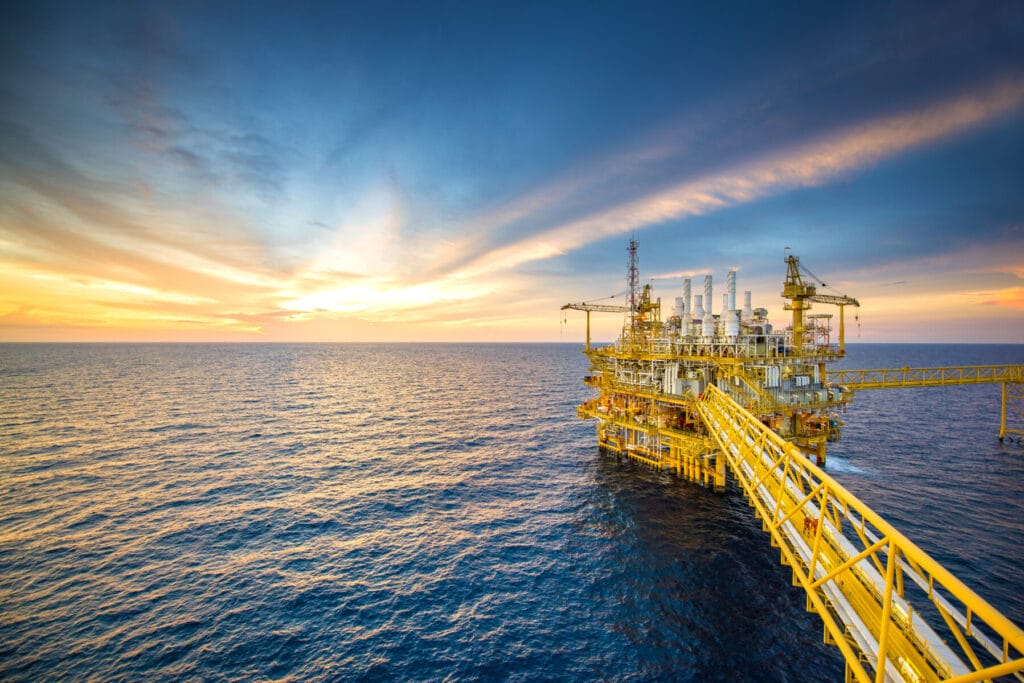
In Oil & Gas, products may support downhole measurement, liquid-gas separation, mass transfer, vessel repair and corrosion-resistant spring applications.
In fabrication, Welding Wire becomes part of the finished structure and must support the base material, welding process and service conditions.
In industrial processing, Knitted Wire Mesh, Demister Pads and conveyor Cable may control movement, filtration, separation or production flow.
8. Which environments demand more from Wire and Cable materials?
Demanding environments commonly involve:
- High or low temperatures
- Moisture and saltwater
- Corrosive chemicals
- Pressure
- Abrasion
- Vibration
- Repeated bending
- Cyclic loading
- High static loads
- Strict cleanliness requirements
- Tight dimensional interfaces
In these conditions, selecting only by alloy and nominal size may leave important performance requirements undefined.
The Application Is the Real Specification
A specification may define the physical product, but the application explains why each requirement exists.
For example, a specification may call for Stainless Steel Cable of a particular diameter and construction. The application may reveal that the Cable must also:
- Travel repeatedly over a pulley
- Operate outdoors
- Resist saltwater exposure
- Maintain a controlled finished length
- Connect to a specific fitting
- Carry a defined working load
- Fit within an existing housing
Those conditions influence the appropriate construction, alloy, coating, fitting, tolerance and inspection method.
Without the application context, a supplier may be able to manufacture the product exactly as described while still producing something that does not perform as intended.
This is particularly important when an existing product is being redesigned, replaced or sourced from a new manufacturer. The original drawing may not document every characteristic that contributed to successful performance.
Surface condition, package configuration, tensile range, cast, helix or manufacturing history may have become part of the process without being formally added to the specification.
The application review helps identify those hidden requirements.
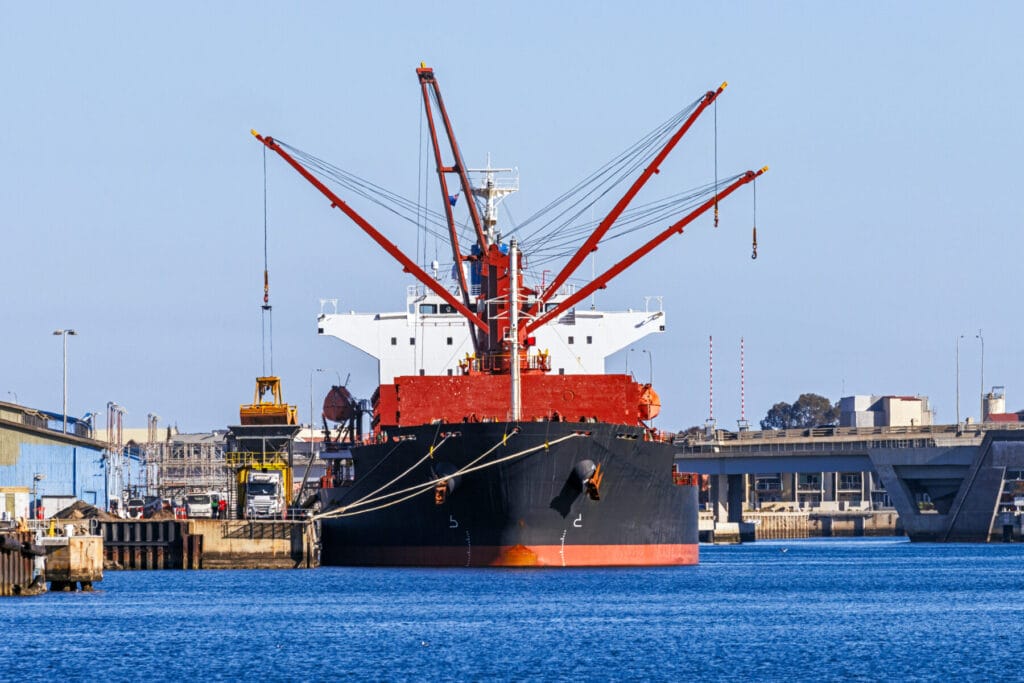

Where Industrial Wire and Cable Actually Appear
Wire products perform several fundamental functions across industry.
Carrying Loads and Controlling Movement
Cable and Cable Assemblies can transmit forces between components, control movement or support suspended loads.
Examples include:
- Aircraft flight controls
- Throttle controls
- Fitness equipment
- Stage rigging
- Safety restraints
- Marine equipment
- Architectural systems
- Industrial control mechanisms
Loos & Co. manufactures Aircraft Cable used in flight-control, landing-gear and emergency systems. Its Cable Assembly capabilities also support Aerospace, Military, Construction, Medical and other Commercial applications.
The Cable construction, fitting design and routing system must work together. A strong Cable can still perform poorly if the construction is too stiff, the termination is unsuitable or the pulley geometry introduces excessive bending stress.
Providing Elastic Movement
Spring Wire stores and releases mechanical energy.
It may be formed into:
- Compression springs
- Extension springs
- Torsion springs
- Retaining components
- Actuator components
- Ventilkomponenten
- Precision medical or industrial mechanisms
The finished spring’s performance depends on more than the alloy. Wire diameter, tensile properties, surface quality, heat-treatment condition and coiling behaviour can all influence manufacturability and service life.
Central Wire produces Stainless Steel and Nickel Alloy Spring Wire for applications across Aerospace, Automotive, Oil & Gas and other industrial sectors.
Joining Materials Through Welding
Welding Wire becomes part of the completed joint.
Unlike a temporary manufacturing tool, the filler material remains in the structure and contributes to its:
- Stärke
- Corrosion resistance
- Temperature performance
- Chemical compatibility
- Fatigue behaviour
- Service life
Generation4™ Welding Wire is produced for MIG, TIG and SAW processes in Stainless Steel, Nickel and specialty Nickel-Chrome alloys. These products are used in sectors including Oil & Gas, Construction, Aerospace, Automotive, Energy and heavy fabrication.
The correct selection must account for the base material, welding procedure, joint design and finished operating environment.
Filtering and Separating Process Streams
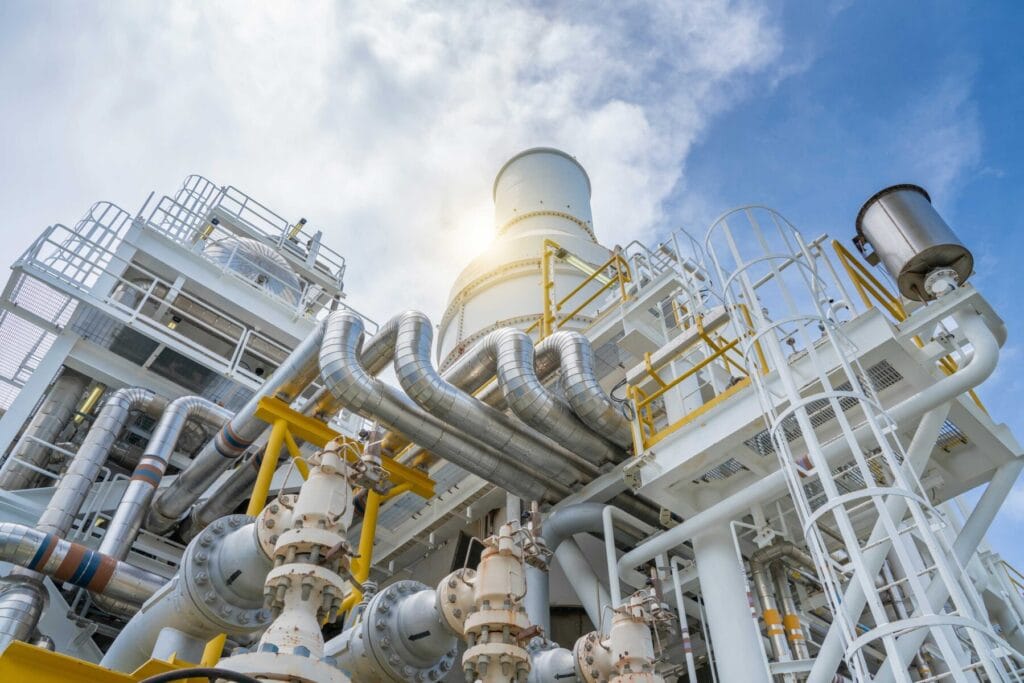
Knitted Wire Mesh and Demister Pads are used where industrial systems need to separate liquids, gases or entrained droplets.
Applications can include:
- Gas-liquid separators
- Refinery towers
- Distillation equipment
- Scrubbers
- Knockout drums
- Process absorbers
- Chemical separators
- Pollution-control equipment
Tech-Mesh™ products can be customized through alloy, Wire diameter, mesh density and geometry. Demister Pads are designed to trap liquid droplets while allowing the gas or vapour stream to continue through the system.
In these applications, the Wire’s role is not primarily structural. It creates a controlled internal geometry that supports separation performance, pressure-drop requirements and process flow.
Producing Heat
Resistance Wire converts electrical energy into heat.
It can be used in:
- Kitchen appliances
- Industrial heating equipment
- Heated flooring
- Ovens
- Dryers
- Thermal-control systems
- Specialized heating coils
Central Wire manufactures Resistance Wire in alloys that include Nichrome and Copper-based options for heating-coil applications.
Selection must consider electrical resistance, operating temperature, oxidation behaviour, Wire diameter and the expected heating cycle.
Operating Downhole
Slicklines are used to lower, retrieve or operate tools in oil and gas wells.
The product may need to provide:
- Long continuous lengths
- High breaking strength
- Dimensional consistency
- Corrosion resistance
- Performance in sour or sweet well conditions
- Compatibility with downhole equipment
Central Wire’s GD™-SUPA® Slicklines are manufactured for downhole applications, well measuring and electromechanical uses, with options for different well temperatures and environmental conditions.
A product operating thousands of feet into a well presents a very different risk profile than a short Wire component operating in a controlled factory environment.
Forming Fasteners and Precision Components
Cold Heading Wire and specialty bar products become components such as:
- Schrauben
- Schrauben
- Rivets
- Pins
- Washers
- Fittings
- Machined parts
During cold heading, the material must flow under high forming pressure without splitting, cracking or producing unacceptable dimensional variation.
Central Wire manufactures Cold Heading Wire for fastening systems and offers coatings and lubricants intended to support forming under demanding heat and pressure conditions.
Supporting Material Movement
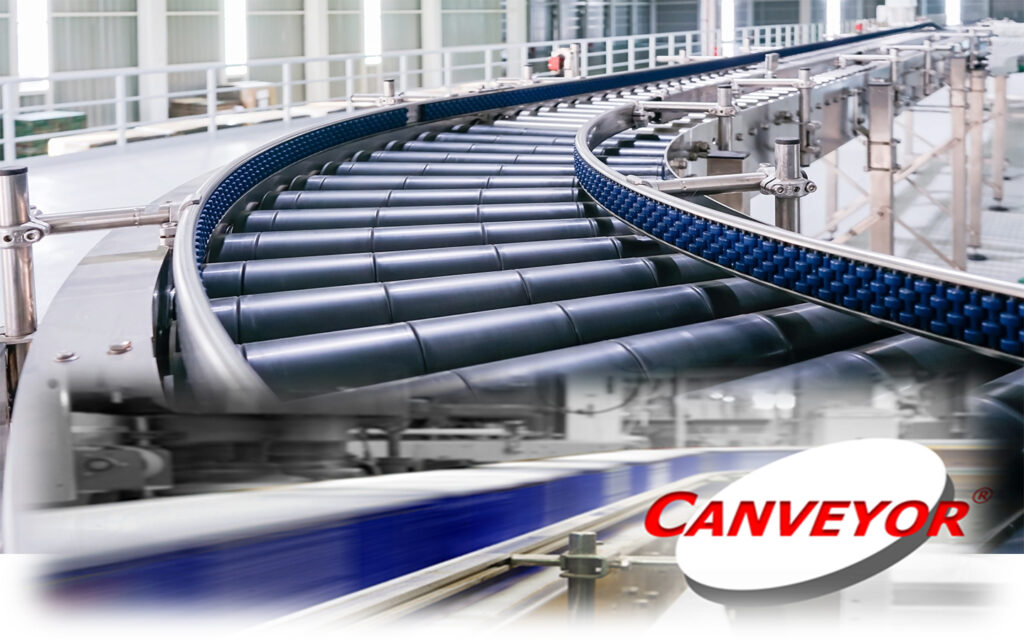
Conveyor Cable is used to support movement through processing and manufacturing systems.
Applications may require resistance to:
- Repeated cycling
- Abrasion
- Moisture
- Cleaning processes
- Production loads
- Environmental exposure
Loos & Co.’s Canveyor® product line is designed for conveyor applications across industries where production speed and movement consistency are important.
What Different Industries Require From Wire and Cable Products
Industrial sectors often use similar product categories for very different reasons.
Luft- und Raumfahrt
Aerospace applications commonly place a high priority on:
- Material traceability
- Approved specifications
- Controlled manufacturing processes
- Dimensional repeatability
- Weight
- Fatigue resistance
- Reliable movement
- Inspection documentation
Aircraft Cable and Cable Assemblies may support flight controls, throttle controls, landing gear and emergency systems. Loos & Co. manufactures Aerospace products at AS9100-certified locations and supports multiple military and aviation specifications.
The product must not only achieve the required strength. It must remain predictable when repeatedly loaded, routed and operated within the aircraft system.
Ölbenzin
Oil and gas products may encounter:
- Sour or sweet well conditions
- High pressure
- Corrosive fluids
- Elevated temperature
- Long operating depths
- Chemical-processing environments
- Difficult maintenance access
Products used in this industry include Slicklines, Welding Wire, Spring Wire, Knitted Wire Mesh, Demister Pads and packing solutions.
These products serve different functions, including downhole measurement, filtration, liquid-gas separation, mass transfer and vessel repair.
Product selection should account for both the immediate function and the consequences of inspection, retrieval or replacement after installation.
Food Processing and Beverage
Food and beverage operations may require products that can withstand:
- Temperature changes
- Moisture
- Repeated cleaning
- Process chemicals
- Sanitary expectations
- Continuous production
- Filtration or separation requirements
Knitted Wire Mesh can be used in breweries and distillation systems, while Canveyor® Cable supports movement through processing equipment.
Material selection may prioritize corrosion resistance and cleanability, but the product’s geometry, surface condition and compatibility with the process equipment are also important.
Construction and Architecture
Construction applications often emphasize:
- Stärke
- Availability
- Installation efficiency
- Environmental durability
- Reliable fittings
- Dimensional compatibility
- Code or project requirements
Wire and Cable products can be used in seismic bracing, architectural systems, rigging, lifting, structural features and safety applications.
Cable Assemblies may require specific end fittings, installed lengths and attachment methods. The design must consider not only the Cable itself but the complete load path.
Marine
Marine environments introduce:
- Saltwater
- Humidity
- Weather exposure
- Motion
- Abrasion
- Corrosion
- Difficult inspection access
Cable Assemblies, marine Cable, Fine Wire, Shaped Wire and Welding Wire can all be used in marine systems. Central Wire’s marine product information emphasizes the importance of corrosion resistance, durability and strength in these applications.
A product suitable for indoor industrial use should not automatically be assumed suitable for saltwater exposure.
Medical and Precision Equipment
Medical and precision applications may require:
- Small diameters
- Controlled surfaces
- High dimensional accuracy
- Clean manufacturing
- Specialized materials
- Lot traceability
- Finished Cable Assemblies
- Consistent mechanical response
Central Wire manufactures Fine Wire for Medical, Aerospace and other precision applications. Loos & Co.’s Medical Technologies Division combines Wire, Cable and custom fittings into specialized finished assemblies.
In these systems, a very small component can influence the movement, responsiveness or reliability of a much larger device.
Automotive and General Industrial Manufacturing
Automotive and industrial systems may require Wire products for:
- Federn
- Verbindungselemente
- Schweißen
- Cable controls
- Heating
- Precision components
- Safety systems
- Automated machinery
High production volumes make consistency particularly important. Small variations that appear manageable during low-volume production may create substantial scrap or downtime when repeated across thousands of components.
The product must support both the finished application and the equipment used to manufacture it.
General-Purpose Wire Versus Application-Specific Wire
A general-purpose product is not an inferior product. It is a product designed around common requirements.
It may be the most economical and practical option when:
- The operating environment is controlled
- Loads are moderate and well understood
- Standard dimensions fit the equipment
- The application does not require unusual fatigue performance
- Standard documentation is sufficient
- Replacement is straightforward
- Established industry products already meet the requirement
Application-specific selection becomes more important as operating demands increase.
General-purpose consideration | Application-specific consideration |
Standard alloy | Alloy selected for corrosion, heat or chemical exposure |
Nominal dimensions | Tolerances tied to equipment or finished fit |
Standard tensile properties | Controlled range tied to forming or spring performance |
Bare surface | Specialized finish, lubricant or coating |
Standard round Wire | Flat, shaped or custom profile |
Common Cable construction | Construction selected for flexibility or fatigue |
Standard packaging | Package designed for automated production |
Basic certification | Additional traceability, testing or approval |
The decision should be based on functional necessity.
A tighter tolerance may improve fit but add cost. A specialized alloy may increase corrosion resistance but introduce different forming or welding requirements. A coating may improve abrasion resistance but change the finished diameter.
Every additional requirement should have a clear connection to the application.
Why One Product Works in One Industry but Fails in Another
Material performance is conditional.
It depends on the combination of material, manufacturing history, geometry and operating environment.
Temperature Changes Material Behaviour
High temperatures may affect:
- Stärke
- Oxidation
- Electrical resistance
- Coating performance
- Spring properties
- Creep or dimensional stability
Low temperatures may affect toughness, flexibility or impact response.
A product should be selected for the expected operating range rather than only the installation temperature.
Corrosion Depends on the Actual Environment
The term “corrosion resistant” does not mean resistant to every environment.
Performance may vary depending on exposure to:
- Saltwater
- Acids
- Chlorides
- Sulphur compounds
- Cleaning chemicals
- Moisture
- Temperature
- Galvanic contact with another metal
An alloy that performs well in one atmosphere may experience localized or accelerated corrosion in another.
Movement Changes the Type of Stress
A static load and a cyclic load are not equivalent.
Cable that holds a stationary object experiences a different demand from Cable that repeatedly bends over a sheave. Wire in a spring experiences repeated deflection. A Cable Assembly may experience tension, bending, vibration and fitting stress simultaneously.
Loos & Co.’s technical guidance notes that increasing the drum or pulley size relative to the Wire diameter generally supports longer Wire Rope service life.
Surface Contact Creates Wear
A product may rub against:
- A pulley
- A guide
- A housing
- Another Cable
- A moving machine component
- Process material
Wear can damage a coating, reduce the metallic cross-section or introduce surface defects that contribute to fatigue.
Installation Changes the System
Installation can affect:
- Alignment
- Tension
- Bend radius
- Fitting orientation
- Cable routing
- Contact points
- Surface damage
A correctly manufactured product can still fail when installed outside its intended configuration.
How to Match Wire and Cable Products to Real-World Conditions
A structured application review helps prevent important requirements from being overlooked.
Step 1: Define the Primary Function
Begin with what the product must do.
Is it intended to:
- Carry a load?
- Control movement?
- Produce heat?
- Form a spring?
- Create a weld?
- Filter a process stream?
- Operate a downhole tool?
- Become a fastener?
- Support a structural or safety system?
The primary function determines which performance properties should receive the greatest attention.
Step 2: Define the Environment
Document the actual operating conditions.
This includes:
- Temperature range
- Moisture
- Chemicals
- Saltwater
- Indoor or outdoor exposure
- Cleanliness requirements
- Pressure
- Radiation where applicable
- Expected service duration
The most severe possible condition is not always the same as the normal operating condition. Both should be understood.
Step 3: Define Load and Movement
For a load-bearing or moving product, determine:
- Maximum load
- Normal operating load
- Static or cyclic loading
- Direction of movement
- Number of expected cycles
- Pulley or sheave diameter
- Bending locations
- Vibration
- Shock loading
- Required safety factor
Cable selection should not be based on breaking strength alone. Flexibility, construction, routing and bending conditions also affect service performance.
Step 4: Define the Manufacturing Process
Wire may be:
- Drawn
- Formed
- Coiled
- Welded
- Braided
- Knitted
- Cut
- Swaged
- Crimped
- Ground
- Machined
- Coated
- Installed into an assembly
Each downstream process creates additional requirements.
Spring coiling may require controlled tensile properties and surface lubrication. Welding requires suitable chemistry and cleanliness. Automated feeding may require consistent payoff and package winding.
Step 5: Define Critical Dimensions
Identify which dimensions directly affect function.
Examples include:
- Wire diameter
- Profile dimensions
- Cable outside diameter
- Coating thickness
- Assembly length
- Fitting dimensions
- Bend radius
- Sheave groove
- Finished spring geometry
Not every dimension requires the same tolerance.
The most effective specification distinguishes functionally critical dimensions from those that do not materially affect performance.
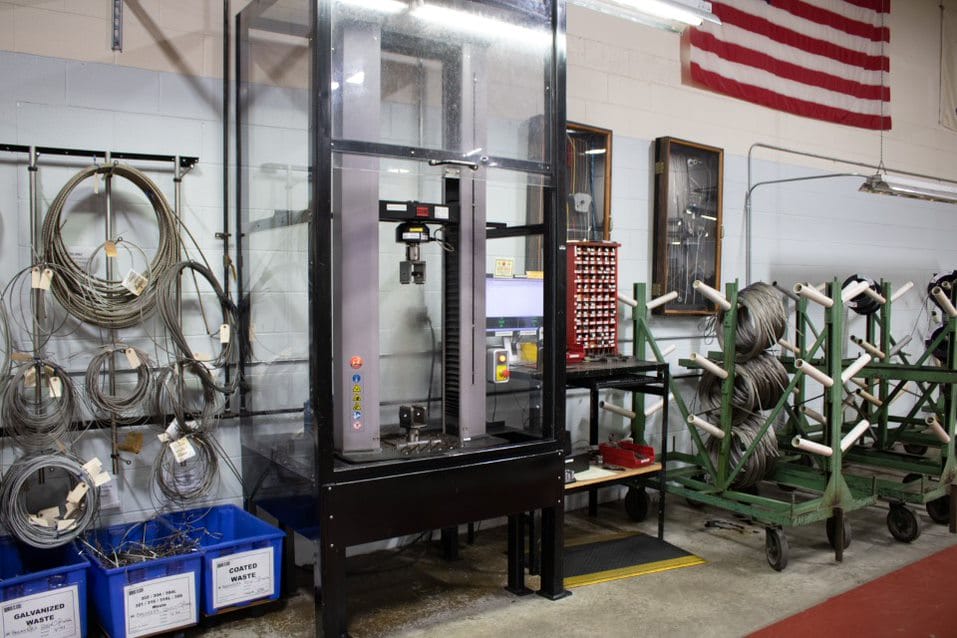
Step 6: Define Testing and Documentation
Determine whether the application requires:
- Chemical certification
- Mechanical testing
- Dimensional inspection
- Corrosion testing
- Electrical-resistance testing
- Breaking-strength testing
- Proof loading
- Non-destructive testing
- Material traceability
- Industry-specific approvals
- Customer-specific inspection reports
The inspection method should also be agreed upon. Two teams can measure the same feature differently if equipment, reference points or loading conditions are not defined.
Step 7: Define Packaging and Handling
Packaging can affect production even when the material itself is acceptable.
Consider:
- Spool or reel dimensions
- Package weight
- Winding pattern
- Payoff direction
- Protective wrapping
- Moisture control
- Cleanliness
- Assembly separation
- Storage requirements
Packaging should allow the product to arrive and dispense without introducing damage, tangling or unnecessary handling.
A Closer Look at Oil & Gas, Fabrication and Processing
These three environments demonstrate why one broad description of “industrial Wire” is insufficient.
Oil & Gas: Long Lengths and Severe Conditions
A Slickline may extend deep into a well while carrying tools or measurements.
Its requirements can include:
- High breaking load
- Controlled diameter
- Long continuous length
- Corrosion resistance
- Compatibility with well conditions
- Surface quality
- Reliable spooling and retrieval
At the processing level, Knitted Wire Mesh and Demister Pads perform an entirely different function. They create internal structures that help separate liquid droplets from gas streams or support mass-transfer operations.
Welding Wire may then be used to fabricate or repair the vessels, piping and processing equipment around those systems.
The products share an industry but not a function. Each must be selected according to its particular load, process and environment.
Fabrication: The Filler Material Becomes the Structure
In fabrication, Welding Wire is consumed during manufacturing but remains within the finished product.
Selection should consider:
- Base-metal compatibility
- Welding process
- Joint configuration
- Required weld strength
- Corrosion exposure
- Operating temperature
- Shielding atmosphere
- Deposition requirements
- Surface condition
- Traceability
A Wire that feeds inconsistently can affect productivity before it affects final weld performance. Diameter, surface quality, cast, helix and packaging may all influence how the Wire moves through the equipment.
The correct product therefore needs to support both the welding process and the service requirements of the completed joint.
Processing: Movement, Filtration and Separation
Industrial processing may use Wire products to:
- Move material
- Separate phases
- Remove mist
- Provide contact surface
- Filter contaminants
- Support production equipment
- Control system movement
A conveyor Cable and a Demister Pad may operate within the same facility, but they face different design priorities.
The conveyor product may emphasize fatigue, abrasion and movement. The mesh product may emphasize density, geometry, pressure drop, alloy compatibility and filtration efficiency.
Application-specific selection ensures each product is evaluated according to the function it performs rather than the industry label alone.
Environments That Demand More From Materials
Heat
High-temperature applications may require specialized Stainless Steel, Nickel or resistance-heating alloys.
Important considerations include:
- Retained strength
- Oxidation resistance
- Electrical behaviour
- Thermal expansion
- Coating stability
- Cycling frequency
Resistance Wire selection is particularly dependent on the relationship between alloy, electrical resistance, Wire diameter and operating temperature.
Corrosion and Moisture
Moisture can introduce corrosion, but the exact risk depends on the environment.
Saltwater, chemical vapours and process fluids may require different materials or protective approaches.
Coated Cable can provide an added exterior barrier and improved abrasion resistance, but the underlying Cable alloy and construction must still match the environment. Loos & Co. supplies coated Cable in applications including Fitness, Recreation, Marine and Mining.
Chemicals
Chemical exposure may affect:
- Base metal
- Glasur
- Lubricant
- Fittings
- Adjacent components
Compatibility should be reviewed across the entire assembly rather than only the Wire.
Pressure
Pressure can affect products in downhole, filtration and process systems.
The product may need to maintain its geometry, strength or filtration characteristics despite pressure changes and fluid flow.
Abrasion
Abrasion can occur during:
- Repeated Cable movement
- Material conveying
- Installation
- Contact with guides
- Vibration
- Handling
A coating may reduce direct metallic contact, but its thickness, material and adhesion must be suitable for the application.
Vibration
Vibration can create repeated low-level movement that contributes to:
- Fatigue
- Loosening
- Fretting
- Surface wear
- Fitting damage
The system should be reviewed for resonance, unsupported lengths and concentrated stress locations.
Repeated Movement
Applications involving pulleys, springs or control Cable depend on cycle performance rather than only static strength.
Construction, Wire diameter, bend radius and surface condition become increasingly important as the number of cycles rises.
High Loads
High-load applications require adequate strength, but also suitable:
- Fittings
- Terminations
- Safety factors
- Load paths
- Inspection procedures
- Installation methods
The complete system is only as reliable as the interaction between its components.
Product Selection Should Consider the Complete System
A product may be correctly selected in isolation and still be unsuitable for the system.
For a Cable Assembly, the system includes:
- Cable material
- Cable construction
- Glasur
- End fittings
- Termination method
- Finished length
- Installation geometry
- Pulley or sheave
- Operating load
- Environment
For Welding Wire, the system includes:
- Base material
- Filler alloy
- Welding process
- Equipment
- Shielding gas
- Joint design
- Surface preparation
- Heat input
- Final service environment
For a filtration product, the system includes:
- Process fluid
- Temperature
- Flow rate
- Pressure drop
- Droplet size
- Mesh alloy
- Mesh density
- Product geometry
- Cleaning requirements
This systems-based approach helps buyers avoid optimizing one characteristic while creating a problem elsewhere.
For example, selecting a stronger but less flexible Cable may improve static load capacity while reducing cycle life. Tightening a dimensional tolerance may improve fit but increase cost and lead time. Adding a coating may improve abrasion resistance but create an outside diameter that no longer fits the existing pulley.
The objective is not to maximize every property. It is to balance the properties that determine successful performance.
Common Signs That an Application Requires More Review
Additional technical review may be needed when:
- A standard product has failed repeatedly
- The product experiences corrosion or unexpected wear
- Performance varies between production lots
- The operating environment has changed
- Equipment speeds have increased
- A Cable is being routed over a smaller pulley
- The product will be installed in a harder-to-access location
- The specification does not describe surface or mechanical requirements
- A new supplier is replacing a qualified product
- A finished assembly combines multiple materials
- Documentation or traceability requirements have increased
- The cost of field replacement is high
These conditions do not automatically require a custom product.
They indicate that the connection between the product and the application should be reviewed before another purchasing decision is made.
Application Review Checklist for Technical Buyers
Before requesting a quotation or approving a Wire, Cable or Cable Assembly, ask:
- What is the product’s primary function?
- Which failure mode would create the greatest risk?
- What temperature range will the product experience?
- Will it encounter moisture, saltwater, chemicals or corrosive gases?
- Is the load static, cyclic, dynamic or shock-related?
- Will the product bend, rotate, vibrate or travel over a pulley?
- Which alloy properties are most important to the application?
- Which dimensions directly affect fit or performance?
- Does the downstream process require a specific surface, coating or lubricant?
- Will the product be welded, formed, coiled, machined or terminated?
- Are the Cable construction and fittings compatible?
- How will the finished product be measured?
- What testing is required before shipment?
- What material and lot documentation must be provided?
- Does the packaging need to work with automated equipment?
- How difficult and expensive would replacement be after installation?
- Has the supplier reviewed the actual application rather than only the drawing?
- How will material, process or packaging changes be communicated?
How Central Wire Group of Companies Supports Real-World Applications
Across its Wire and Rope & Assemblies operations, Central Wire Group of Companies supports products from the initial Wire stage through completed Cable and Assembly systems.
Central Wire’s capabilities include specialty Wire drawing, heat treatment, surface preparation, profile manufacturing, testing, grinding and packaging. Its products support applications involving springs, welding, heating, filtration, fastening, downhole operations and precision components.
Loos & Co. manufactures Aircraft Cable, Wire Rope, Coated Cable, fittings and custom Cable Assemblies for Commercial and Mission-Critical applications. Its technical resources also address Cable properties, assembly measurement, bend radius, jacket tolerance and sheave specification.
These combined capabilities make it possible to consider how Wire properties influence Cable construction, how Cable interacts with fittings and sheaves and how the finished product behaves in its actual system.
The objective is not simply to supply a product associated with a particular industry.
It is to understand:
- What the product must accomplish
- Which conditions it must withstand
- How it will be processed or installed
- Which variables must remain consistent
- How its performance will be verified
That application knowledge helps engineers, purchasers and quality teams make more informed product and supplier decisions.
Final Takeaway
Industrial Wire and Cable products are often hidden within larger systems, but their influence is not.
They carry loads, control motion, produce heat, form springs, create welds, filter process streams, operate downhole tools and connect mechanical components.
The correct product cannot always be identified through alloy, diameter or price alone.
Effective selection requires an understanding of:
- The product’s function
- The operating environment
- Loads and movement
- Temperature and corrosion
- Downstream manufacturing
- Critical dimensions
- Testing and documentation
- Installation and maintenance
- The consequences of failure
A product that performs well in one industry may fail in another because the conditions—not necessarily the basic specification—have changed.
The strongest sourcing decisions connect the product to the complete application before manufacturing begins. When that connection is established early, technical teams can define clearer requirements, reduce unnecessary customization and select materials that perform more predictably in the field.