
When most people think about artificial intelligence, they think about software, processors, and increasingly powerful computer systems. Behind all that computing power, though, is a much more physical story.
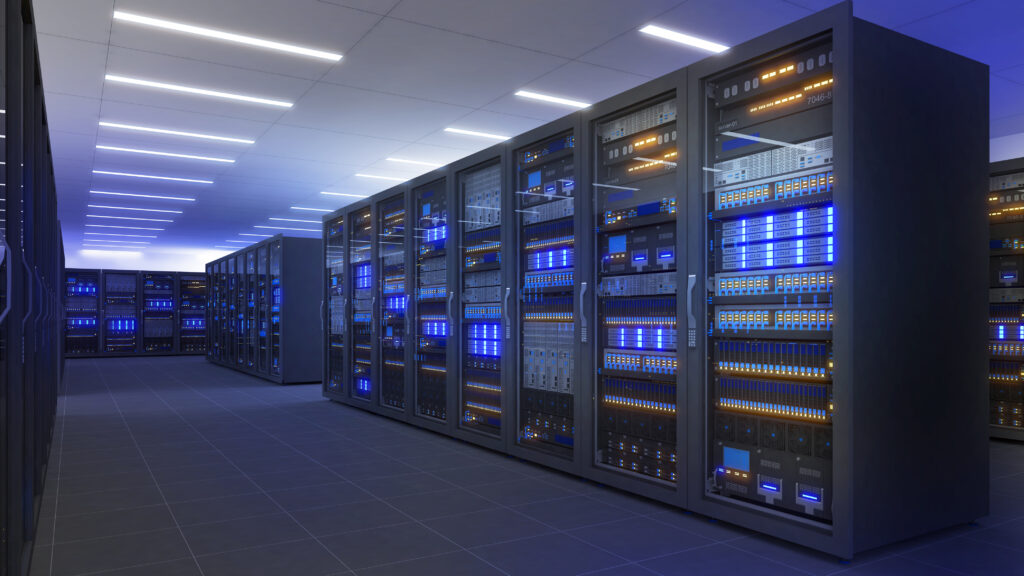
AI requires enormous amounts of computing capacity. That capacity sits inside data centers that need electricity, cooling, backup power, electrical distribution, controls, and connections to the wider power grid. As AI adoption grows, so does the infrastructure needed to support it.
That puts an established industrial material in an increasingly important position: copper
The Physical Infrastructure Behind AI
The growth of AI is contributing to rapid expansion within the global data center market. According to the International Energy Agency, data centers consumed about 415 terawatt-hours of electricity globally in 2024. The IEA expects that figure to more than double to around 945 terawatt-hours by 2030.
Supplying that amount of electricity takes much more than connecting a building to the grid. Power can move through substations, transformers, switchgear, uninterruptible power supply systems, power distribution equipment, backup generation systems, and ultimately the racks containing computing equipment.
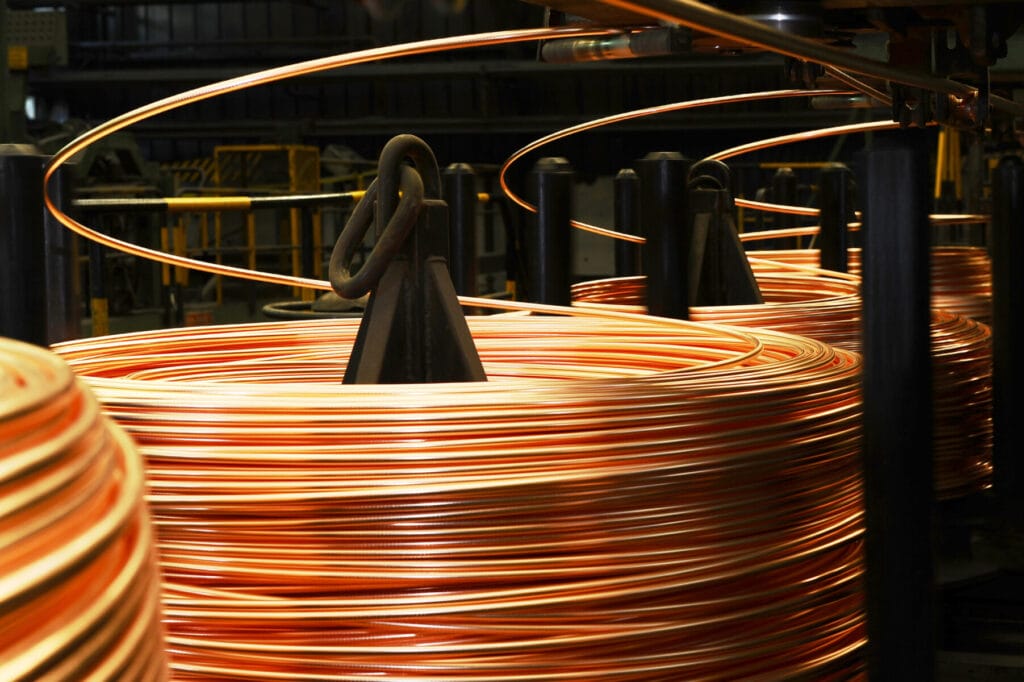
Copper plays a role throughout that journey. Its combination of electrical and thermal conductivity, ductility, and reliability has made copper an important material for electrical infrastructure for generations. The AI data center boom doesn’t change those properties. It increases the scale at which they’re needed.
Where Does Copper Fit in a Data Center?
Some of the most obvious applications are electrical. Copper can be found in transformers, wiring, grounding systems, motors, generators, switchgear, busways, connectors, contacts, and other power distribution equipment.
But electricity is only part of the equation. Modern computing equipment produces a tremendous amount of heat. As computing density increases, managing that heat becomes more challenging.
This is helping drive interest in more advanced liquid-cooling systems. Copper’s high thermal conductivity makes it particularly useful in heat-transfer applications such as cold plates and heat exchangers. The Copper Development Association has highlighted copper cold plates as an important component of direct-to-chip liquid-cooling systems for high-density data centers.
So, as data centers become more powerful, copper can play two important roles:
Moving electricity. And moving heat.
It's About More Than Pure Copper
This conversation shouldn’t stop with copper alone.
The wider family of red metals includes materials such as brass, bronze, copper-nickel, and other copper alloys. By changing the alloy composition, manufacturers can create different combinations of electrical conductivity, corrosion resistance, strength, formability, wear resistance, and spring performance.
That makes these materials useful across numerous components within electrical and mechanical equipment.
Depending on the application and required specification, copper alloys may be considered for components such as:
- Electrical contacts
- Connectors
- Terminals
- Federn
- Relays
- Clips
- Switching components
- Verbindungselemente
- Controls
- Heat-transfer and mechanical components
Not every copper alloy is right for every application. Conductivity, mechanical properties, temperature, corrosion exposure, material temper, plating, and manufacturing requirements all influence material selection.
What Does AI Mean for Copper Demand?
Artificial intelligence isn’t solely responsible for growing copper demand. Copper is already essential to electrical grids, renewable energy, electric vehicles, construction, industrial equipment, electronics, and countless other applications.
Data centers add another source of demand. And AI is accelerating it.
The infrastructure needed to power new facilities can extend far beyond the walls of the data center itself. New capacity may require additional substations, transformers, transmission infrastructure, backup generation, cooling systems, and electrical equipment before the first server becomes operational.
That means the copper story surrounding AI isn’t simply about how much metal sits inside a data center. It’s also about the infrastructure required to power, cool, connect, and maintain it.
Red Metals in the Next Generation of Infrastructure
For manufacturers, the growth of data centers raises some interesting questions.
How will greater demand affect material availability? How will electrical equipment manufacturers manage copper requirements? Which alloys will deliver the right combination of conductivity and mechanical performance? How will manufacturers balance material cost against reliability and service life?
These questions become increasingly important when equipment is expected to operate continuously.
A data center can’t afford frequent failures in critical power or cooling infrastructure. Material selection, manufacturing consistency, testing, traceability, and supply reliability all become part of the equation.
That’s where experienced material suppliers and manufacturers can add value
Supporting the Infrastructure Behind AI
The Central Wire Blog regularly focuses on manufacturing capabilities, product applications, material selection, and the industry trends shaping demand for wire and cable.
For Central Wire, the data center discussion is particularly relevant because the opportunity isn’t limited to one product.
Copper and other red metals can support engineered components within electrical and mechanical equipment. Specialty and fine wire can serve applications that require tight dimensional or mechanical properties. Welding wire supports construction, fabrication, power-generation equipment, and ongoing maintenance. Cable and mechanical assemblies can provide another route into the equipment supporting mission-critical facilities.
The opportunity starts with understanding what each application requires, then matching the material and manufacturing process to those requirements.
AI might start with data. But making AI work at scale takes power, cooling, equipment, infrastructure, and materials. And that’s where the metals industry enters the story.