Generation4™ Welding Wire suitable for various Joint Styles, Welding Types and Welding Processes for your next project
CWI Generation4™ Welding Wire is designed for use in many different welding processes. The three most common types of Welding used with our Stainless Steel and Nickel Welding alloys are Tungsten Inert Gas (TIG), Metal Inert Gas (MIG) and Submerged-Arc Welding (SAW).
To ensure that you select the proper welding consumable alloy to work with your welding process, a brief description of each process is listed below.
Soldadura con gas inerte de tungsteno (TIG)
Highly Skilled Welding for Aesthetic Applications
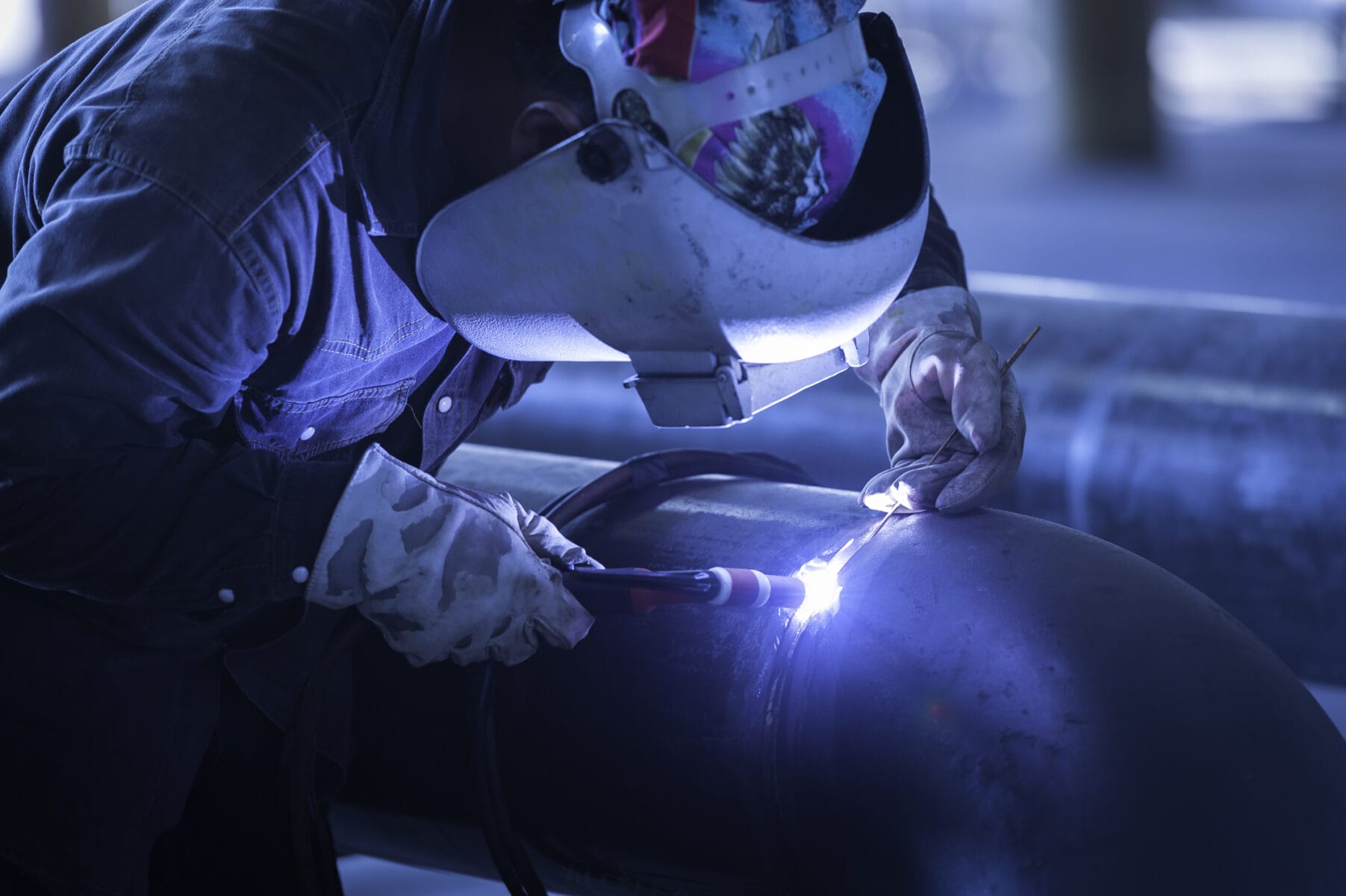
También conocido como Soldadura por arco de tungsteno con gas (GTAW), TIG Welding uses a tungsten electrode, a filler metal and an inert shielding gas (such as argon or helium) during the welding process. This method requires a highly skilled welder, as the manual technique requires two hands to utilize the equipment and apply the filler metal to create the weld joint.
TIG Welding is typically used with stainless steels and non-ferrous metals, on thinner section of metal, and provides the welder greater control over the properties of the weld versus other similar processes. It has the disadvantage of being relatively slow due to its complexity and multi part process.

Soldadura de gas inerte metálico (MIG)
Simple Welding Process for Industrial Applications
También conocido como Soldadura por arco metálico con gas (GMAW), the MIG Welding process employs a welding gun, a power supply, an electrode (alloy wire) and a shielding gas. The welding procedure is uncomplicated, with the welding gun bringing all the required components (power, filler metal, shielding gas) together at the weld point.
Compared to other methods, training for MIG Welding requires less time to develop a usable skill level in the field. It is the preferred welding method in most industrial applications and can be easily adapted to automation if required. Issues with dross and porosity of welds can affect the quality of the finished welds, so additional scrutiny of materials and cleanliness is required.
Soldadura por arco sumergido (SAW)
Automated Welding Method Offering a High Deposition Rate
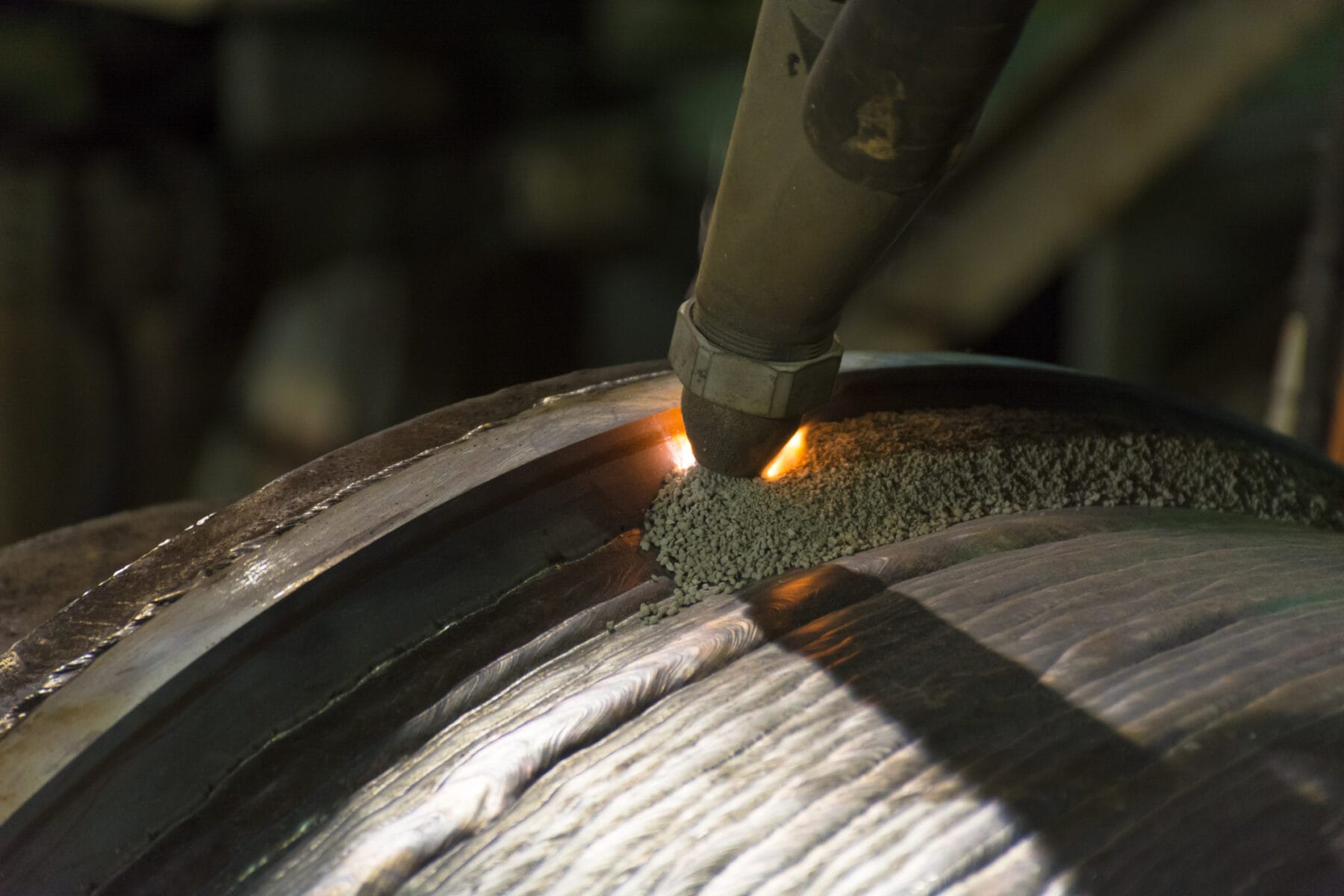
Llamado a menudo Soldadura por Sub-Arco, the SAW Welding process is primarily an automated method of welding that isolates the arc zone below (sub) the surface of a molten flux, eliminating atmospheric contamination. The process uses a continuous feed of consumable welding wire in either a single or multiple wire/alloy combination.
SAW has the advantage of a high deposition rate and deep weld penetration, making for a high ft/min welding rate. It also allows for single pass welds with thicker material. SAW is limited by the plane of the welding operation (straight welds are preferred) and can result in the need for an added slag removal step.
Below is a list of the wire diameters that we have stocked for each of the welding types we support. As a manufacturer, we can always provide customized solutions for your particular welding applications.
Diámetros de alambre por tipo de soldadura
| MIG (GMAW) Diámetros | TIG (GTAW) Diámetros | SUB ARCO (SIERRA) Diámetros | |||
|---|---|---|---|---|---|
| Imperial en. | Métrico mm | Imperial en. | Métrico mm | Imperial en. | Métrico mm |
| 0.023 | 0.6 | 1/16 | 1.6 | 5/64 | 2 |
| 0.030 | 0.8 | 3/32 | 2.4 | 3/32 | 2.4 |
| 0.035 | 0.9 | 1/8 | 3.2 | 1/8 | 3.2 |
| 0.045 | 1.14 | 5/32 | 4.0 | 5/32 | 4.0 |
| 0.047 | 1.2 | 3/16 | 4.8 | ||
| 1/16 | 1.6 |
Procedimientos de soldadura recomendados
CWI Generation4™ Stainless Steel and Nickel Welding Wire alloys can be used with many different joint styles and welding processes. Once the weld joint style, the filler material, and the process has been identified, a proper welding procedure can be identified. The welding procedure chosen for Stainless Steel and Nickel Welding depends upon the process to be used as well as the size and alloy of the actual consumable.
The charts below provide detailed information on the voltage, amperage (current), and gas (atmosphere) to be used in TIG (Tungsten Inert Gas), MIG (Metal Inert Gas), and SAW (Submerged-Arc Welding) Welding processes for the general alloys that we provide:
Procedimientos de soldadura recomendados para alambre de soldadura de acero inoxidable Gen 4
| Proceso | Diámetro del alambre | Voltaje (V) | Amperaje (A) | Gas | |
|---|---|---|---|---|---|
| TIG | 0.035" | 0,9mm | 12-15 | 60-90 | Argón 100% |
| 0.045" | 1,1 mm | 13-16 | 80-110 | Argón 100% | |
| 1/16" | 1,6mm | 14-18 | 90-130 | Argón 100% | |
| 3/32" | 2,4mm | 15-20 | 120-175 | Argón 100% | |
| 1/8" | 3,2 mm | 15-20 | 150-220 | Argón 100% | |
| mig | 0.030" | 0,8 mm | 24-28 | 140-180 | 99% Argón + 1% Oxígeno -o- 97% Argón + 3% CO2 |
| 0.035" | 0,9 mm | 26-29 | 160-210 | 99% Argón + 1% Oxígeno -o- 97% Argón + 3% CO2 | |
| 0.045" | 1,1 mm | 28-32 | 180-250 | 99% Argón + 1% Oxígeno -o- 97% Argón + 3% CO2 | |
| VIO | 0.0625" | 1,6 mm | 29-33 | 200-280 | Se puede utilizar un fundente adecuado |
| 3/32" | 2,4 mm | 28-30 | 275-350 | Se puede utilizar un fundente adecuado | |
| 1/8" | 3,2 mm | 29-32 | 350-450 | Se puede utilizar un fundente adecuado | |
| 5/32" | 4,0 mm | 30-33 | 450-550 | Se puede utilizar un fundente adecuado |
Procedimientos de soldadura recomendados para alambre de soldadura de níquel inoxidable Gen 4
| Proceso | Diámetro del alambre | Voltaje (V) | Amperaje (A) | Gas | |
|---|---|---|---|---|---|
| TIG | 0.035" | 0,9mm | 12-15 | 60-90 | Argón 100% |
| 0.045" | 1,1 mm | 13-16 | 80-110 | Argón 100% | |
| 1/16" | 1,6mm | 14-18 | 90-130 | Argón 100% | |
| 3/32" | 2,4mm | 15-20 | 120-175 | Argón 100% | |
| 1/8" | 3,2 mm | 15-20 | 150-220 | Argón 100% | |
| mig | 0.035" | 0,9 mm | 26-29 | 150-190 | 75% Argón + 25% Helio |
| 0.045" | 1,2 mm | 28-32 | 180-220 | 75% Argón + 25% Helio | |
| 1/16" | 1,6 mm | 29-33 | 200-250 | 75% Argón + 25% Helio | |
| VIO | 3/32" | 2,4 mm | 28-30 | 375-350 | Se puede utilizar un fundente adecuado |
| 1/8" | 3,2 mm | 29-32 | 350-450 | Se puede utilizar un fundente adecuado | |
| 5/32" | 4,0 mm | 30-33 | 400-550 | Se puede utilizar un fundente adecuado |