Click one of the buttons below to skip to the section you’d like to learn most about!
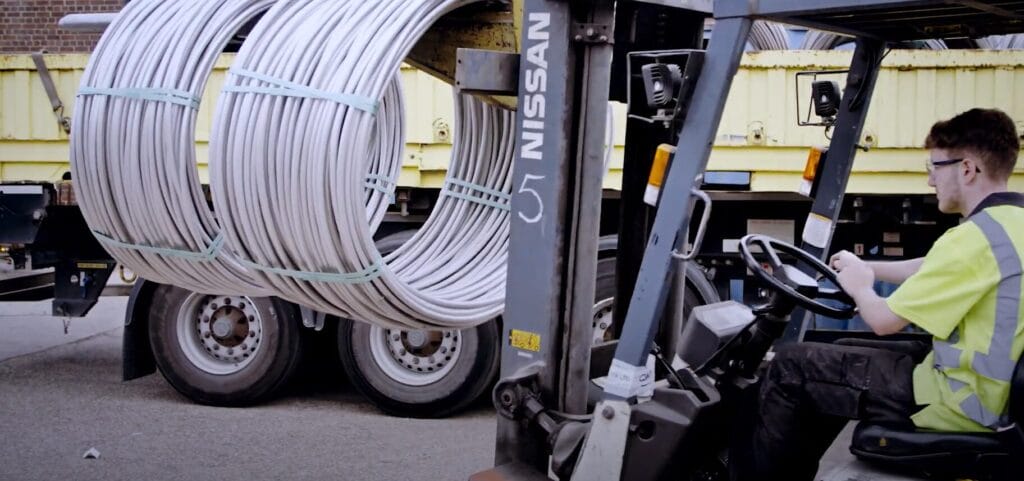
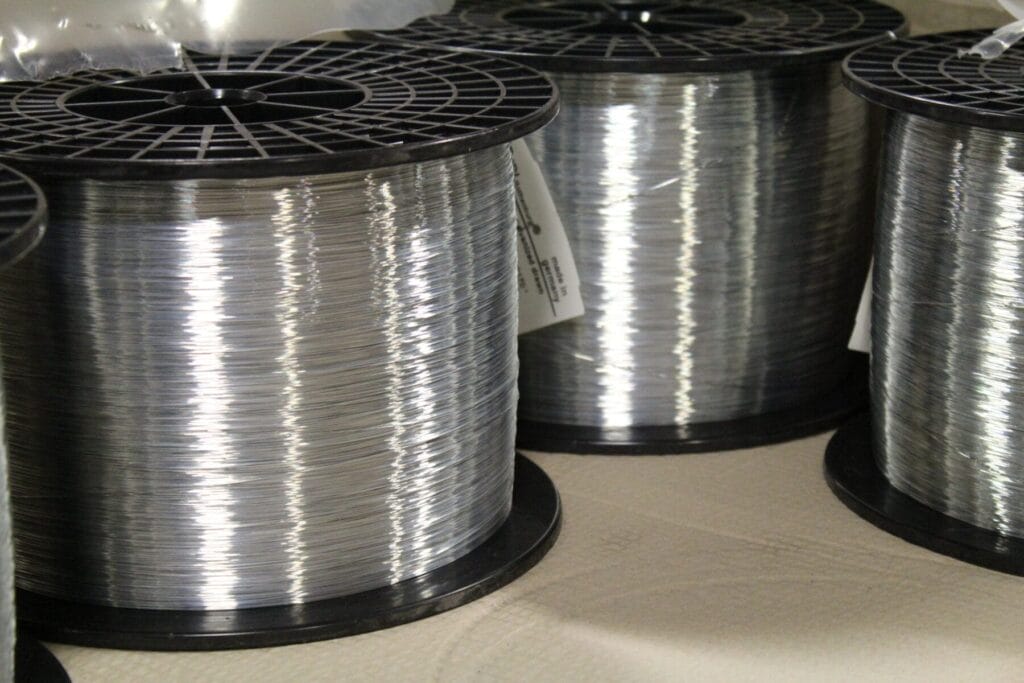
A finished spool of Wire, reel of Cable or completed Cable Assembly is the visible result of a much larger manufacturing system.
Before the product reaches the customer, teams must interpret the order, confirm the material, prepare the equipment, establish the correct process settings, monitor production, inspect critical characteristics, maintain traceability, verify documentation and package the material appropriately.
Each step depends on equipment and established procedures, but neither operates independently. People decide whether the requirements are clear, whether the process is behaving as expected and whether the finished product is ready to move to the next operation.
That work is particularly important in Wire, Cable and Cable Assembly manufacturing because relatively small variations can affect downstream forming, welding, machining, installation or field performance.
The customer sees the finished product. Behind it is a coordinated group of operators, engineers, quality personnel, production planners, customer service representatives, maintenance teams and shipping personnel working to keep the order aligned with its specification and intended application.
This guide examines what happens behind the scenes, how quality is built throughout the manufacturing process and why experienced production teams remain essential even in highly automated operations.
Eight Common Questions About the People and Processes Behind Manufacturing
1. What does a typical day inside a Wire and Cable production team involve?
A production day may include reviewing current orders, confirming material availability, preparing equipment, installing tooling, entering process settings, completing setup checks, monitoring production, recording measurements and coordinating material movement between departments.
The exact work depends on the product.
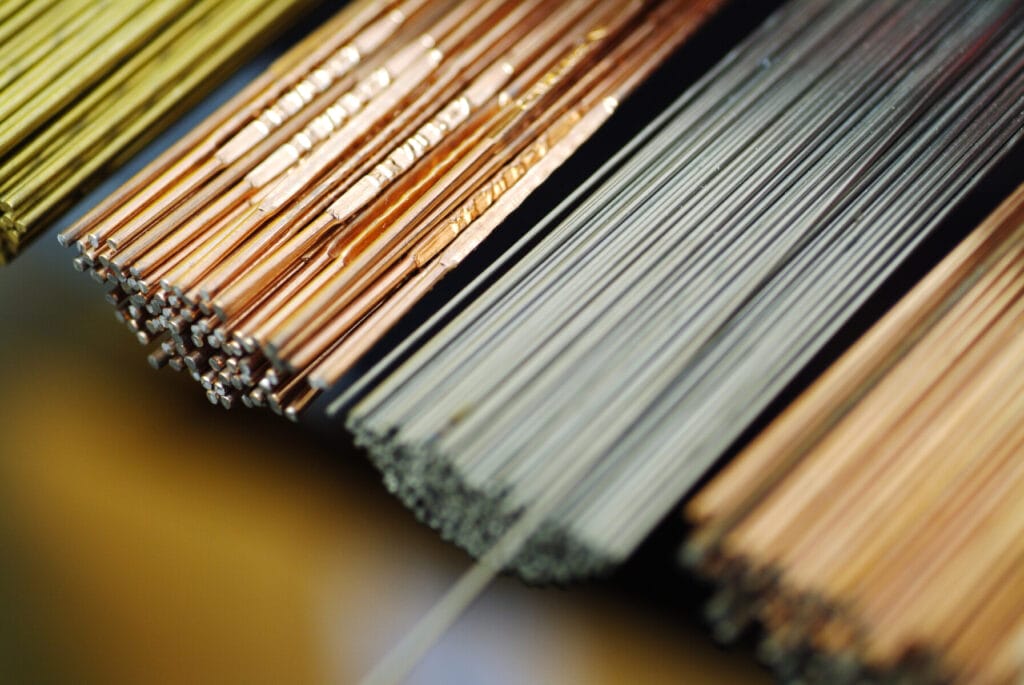
Wire production may involve rod preparation, drawing, annealing, cleaning, coating, straightening, grinding, testing and spooling. Cable production may add stranding, closing and plastic jacketing. Cable Assembly production can involve cutting, fitting installation, swaging, pressing, machining, inspection and finished-length verification. Central Wire and Loos & Co. list these operations among their combined manufacturing capabilities.
The product may change from order to order, but the underlying objective remains the same: follow a controlled process that produces a repeatable result.
2. Who is involved in manufacturing a Wire, Cable or Cable Assembly?
The process commonly involves:
- Customer service and sales teams
- Production planners
- Purchasing and material-control personnel
- Engineers and technical specialists
- Machine operators
- Tooling and maintenance teams
- Quality technicians
- Laboratory personnel
- Packaging and shipping teams
Each group manages a different part of the order. An incorrect interpretation, missed process change or incomplete handoff can affect departments much farther downstream.
Manufacturing quality is therefore not owned by one department. It depends on coordinated responsibilities across the organization.
3. What does quality control look like on the production floor?
Quality control includes much more than inspecting the finished product.
It can involve:
- Incoming material verification
- Setup approval
- First-piece inspection
- Dimensional measurements
- Surface inspection
- Mechanical testing
- Process monitoring
- Equipment and gauge verification
- Lot identification
- Documentation review
- Packaging inspection
- Final release
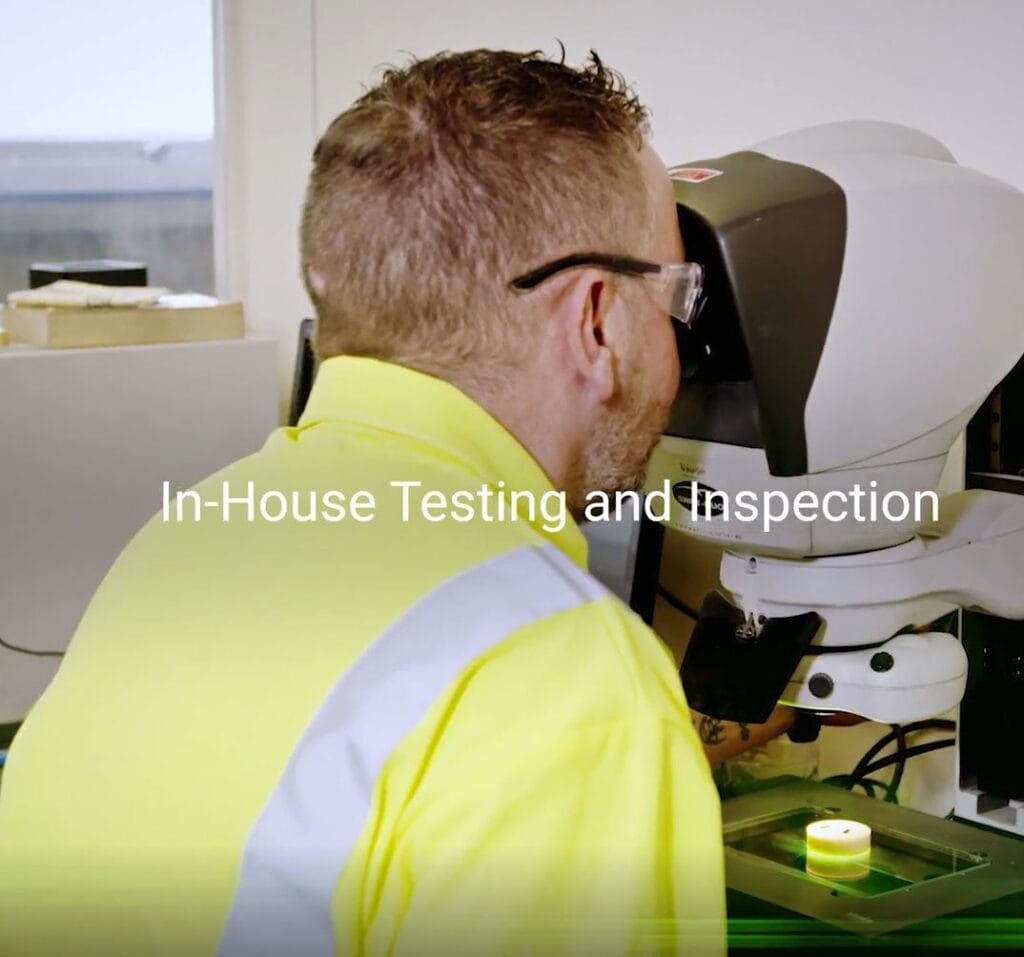
Central Wire identifies strength, hardness, yield, conductivity and surface finish among the characteristics tested at different stages of manufacturing. Loos & Co. lists destructive and non-destructive testing methods for its Wire, Cable, Cable Assembly and precision-manufactured products.
The purpose of these checks is not only to determine whether the product passes at the end. It is to identify process movement before it becomes a larger production issue.

4. How do manufacturing teams solve problems in real time?
Production teams compare what they are seeing on the floor with the expected process condition.
They may notice:
- A measurement moving toward a tolerance limit
- A change in surface appearance
- Increasing drawing force
- Irregular Cable lay
- Inconsistent payoff
- Unexpected machine vibration
- Tool wear
- Coating variation
- A change in how the material forms or feeds
- Packaging that does not meet the order requirement
The response may involve adjusting an approved process setting, replacing tooling, stopping the operation, isolating material or requesting support from engineering, maintenance or quality personnel.
The objective is not to keep the machine running at any cost. It is to determine whether production can continue without placing the product or customer requirement at risk.
5. What happens before a manufactured product is shipped?
Before shipment, the team may need to confirm:
- Product identity
- Material grade
- Lot or heat identification
- Dimensions
- Mechanical or performance results
- Quantity
- Package type
- Labelling
- Certifications
- Customer-specific documents
- Shipping instructions
Packaging is also part of product quality. Central Wire’s capabilities include transferring bulk Wire to shipment-ready packages, with labelling, marking and kitting customized to the specification. Finished Cable Assemblies may require controlled cutting, protected terminations and packaging that prevents tangling or damage.
A product is not ready simply because its manufacturing operation is complete. It must also be correctly identified, protected and prepared for the customer’s receiving and production processes.
6. Why does experience matter in industrial manufacturing?
Experience helps production teams recognize patterns.
An experienced operator may notice a change in sound, appearance, tension or material behaviour before a measurement moves outside tolerance. A quality technician may recognize that several acceptable readings are trending in the same direction. A planner may know that a particular product requires additional setup, inspection or handling time.
This knowledge does not replace documented procedures or measurement. It helps teams use those controls more effectively.
Experience is most valuable when it is translated into repeatable setup methods, training, inspection plans and process standards rather than remaining only with one individual.
7. Why does consistency depend on people as well as machines?
Equipment creates the physical manufacturing capability, but people establish and maintain the conditions under which that equipment operates.
Consistency depends on:
- Correct setup
- Suitable tooling
- Accurate process settings
- Material verification
- Ongoing inspection
- Timely maintenance
- Appropriate adjustments
- Controlled handling
- Clear communication
- Correct documentation
A capable machine can still produce inconsistent results when the setup is incorrect, tooling is worn or an important process change is missed.
Machines repeat the conditions they are given. Manufacturing teams determine whether those conditions remain appropriate.
8. What happens behind the scenes that customers should understand?
Customers may not see:
- Order and drawing reviews
- Material-certification checks
- Production scheduling
- Tooling preparation
- Machine setup
- First-piece approval
- In-process measurement
- Laboratory testing
- Nonconforming-material controls
- Lot traceability
- Documentation preparation
- Package verification
- Coordination between production locations
These activities influence whether the customer receives the correct product, with the required consistency, documentation and packaging.
Understanding them helps buyers evaluate a supplier based on manufacturing control rather than only price, stated capacity or the appearance of a finished sample.
Manufacturing Is a Coordinated System
Manufacturing is sometimes described as a sequence of machines.
That description leaves out much of what determines the final result.
A more accurate view is that manufacturing is a controlled system connecting:
- Customer requirements
- Raw materials
- Equipment and tooling
- Process instructions
- Skilled personnel
- Inspection and testing
- Documentation
- Packaging and logistics
A weakness in one area can affect all the others.
An accurate drawing will not protect the product if the wrong material is released. The correct material will not guarantee performance if the equipment is set incorrectly. A stable production process can still create customer problems if the material is packaged on the wrong spool or shipped without the required certification.
The product must remain connected to its requirements throughout the complete process.
Across the Central Wire Group of Companies, this process can extend from rod preparation and Wire drawing to heat treatment, shaping, grinding, stranding, closing, coating, machining, termination, testing and finished packaging.
The customer may purchase one final item, but that item can represent the work of several operations, departments and manufacturing disciplines.
From Order Review to Production
Production does not begin when a machine starts.
It begins when the customer requirement enters the manufacturing system.
Step 1: Reviewing the Order
The first task is to confirm what the customer is requesting.
The order may include:
- Product description
- Material grade
- Dimensions
- Tolerances
- Construction
- Temper or tensile requirements
- Surface condition
- enrobage
- Finished length
- Fittings
- Applicable standards
- Inspection requirements
- Certifications
- Emballage
- Delivery dates
Teams must determine whether those requirements are complete and consistent.
For example, a Cable Assembly drawing may specify an overall length but fail to define the measurement reference points. A Wire order may define the alloy and diameter without identifying the tensile range required by the customer’s forming equipment.
An unclear requirement should be resolved before production rather than interpreted independently on the floor.
Step 2: Translating Requirements Into a Production Route
Once the product is understood, planning and technical teams determine how it will move through manufacturing.
A Wire product may require:
- Raw material preparation
- One or more drawing operations
- Intermediate heat treatment
- Cleaning or coating
- Final drawing
- Straightening or shaping
- Testing
- Spooling and packaging
Cable may require additional stranding, closing, extrusion or cutting operations.
A completed Cable Assembly may require Cable selection, cutting, fitting preparation, swaging, pressing, inspection, testing and packaging.
The production route should identify the order of operations, equipment, tooling, inspection points and required records.
Step 3: Confirming Material Availability and Identity
Production teams must ensure that the material released to the floor matches the order.
Depending on the product, this may include confirming:
- Alliage
- Heat or lot
- Starting diameter
- Material condition
- Surface condition
- Certification status
- Required country of origin
- Customer approval status
Traceability is especially important when the finished product will be used in Aerospace, Medical, Military or other controlled applications.
Central Wire describes bundling material by individual lot to maintain traceability to the original mill source. Its quality systems also include supplier requirements addressing product identification, records and material traceability.
Step 4: Scheduling the Work
Production planners balance several requirements:
- Customer delivery dates
- Material availability
- Equipment capacity
- Tooling availability
- Setup time
- Inspection requirements
- Heat-treatment schedules
- Downstream operations
- Maintenance needs
- Package availability
The most efficient schedule is not always the one that keeps every machine occupied.
A good schedule accounts for how products move between departments and prevents one operation from producing material faster than the next operation can inspect or process it.
Step 5: Preparing the Equipment
Before production begins, operators may need to:
- Clean the equipment
- Install dies or tooling
- Load the material
- Select the correct program
- Confirm speeds and tensions
- Prepare lubricants or coatings
- Verify guards and safety devices
- Confirm measuring equipment
- Review the production instructions
The setup creates the initial manufacturing condition.
When setup variables are not controlled, the first portion of the production run may differ significantly from the remainder.
Step 6: Approving the Initial Output
The first acceptable product provides evidence that the setup can produce the required result.
Depending on the operation, the initial check may review:
- Diameter
- Width and thickness
- Profile geometry
- Surface condition
- Tensile properties
- Cable construction
- Lay length
- Coating thickness
- Cut length
- Fitting position
- Assembly length
- Package configuration
Approval of the first product does not eliminate the need for later inspection. It confirms that production can begin under the established setup.
Meet the People Behind the Product
Manufacturing quality results from several specialized roles working together.
Customer Service and Sales
Customer-facing teams are often the first people to receive information about the application.
Their responsibilities may include:
- Gathering the initial requirements
- Confirming quantities and delivery needs
- Identifying missing information
- Coordinating technical questions
- Communicating changes
- Providing order updates
The quality of the information entering the organization affects the quality of the manufacturing instructions that follow.
A quotation based on an incomplete requirement may create confusion later, even when the production team follows its instructions correctly.
Production Planning
Planners connect customer demand with manufacturing capacity.
They determine when the order can run, which operations are required and how material should move through the facility.
Their work must account for more than the final delivery date. They may need to reserve time for:
- Tool changes
- Annealing cycles
- Laboratory testing
- Outside processing
- Additional inspection
- Packaging preparation
- Customer hold points
Planning errors may not change the physical product, but they can create rushed setups, interrupted runs or avoidable delivery risk.
Engineering and Technical Specialists
Engineers, metallurgists and technical personnel help translate product requirements into manufacturing decisions.
They may support:
- Material selection
- Process development
- Tooling design
- Heat-treatment requirements
- Drawing sequences
- Welding recommendations
- Tolerance reviews
- Testing requirements
- Root-cause investigations
- Process improvement
Central Wire states that its manufacturing facilities provide metallurgical expertise from product strategy through production, while Loos Precision Products describes engineering support across prototyping, manufacturing, inspection and process improvement.
Technical teams are particularly important when the application extends beyond an established standard product.
Machine Operators
Operators manage the immediate interaction between the material, equipment and production instructions.
Their work may involve:
- Equipment setup
- Material loading
- Process monitoring
- Dimensional checks
- Tool changes
- Adjustment of approved settings
- Production recording
- Material identification
- Housekeeping and contamination control
- Communication with the next operation
Operators are also often the first to see that the process is changing.
A measurement may still be acceptable while the surface, sound, tension or equipment behaviour indicates that further review is needed.
Tooling and Maintenance Teams
Production capability depends on equipment remaining in a controlled condition.
Maintenance and tooling personnel support:
- Preventive maintenance
- Machine repair
- Die and tool preparation
- Calibration support
- Alignment
- Lubrication systems
- Electrical and mechanical troubleshooting
- Spare-part management
- Equipment upgrades
Worn tooling can affect dimensions, surface condition and process stability. Equipment that is operating but not operating correctly may create variation that is difficult to identify through final inspection alone.
Quality Teams
Quality personnel establish and verify the controls used to determine product acceptance.
Their work may include:
- Reviewing specifications
- Creating inspection plans
- Approving setup results
- Performing measurements
- Managing calibration
- Reviewing certifications
- Conducting laboratory testing
- Controlling nonconforming material
- Supporting corrective actions
- Releasing finished products
Central Wire and Loos & Co. identify testing methods covering mechanical properties, corrosion, coatings, electrical resistance and other product characteristics.
Quality teams do not manufacture the product independently. They help ensure the manufacturing process has objective methods for determining whether requirements are being met.
Packaging and Shipping Teams
Packaging and shipping represent the final physical handoff.
These teams may confirm:
- Product and quantity
- Lot identification
- Package type
- Protective materials
- Labels
- Customer markings
- Documentation
- Destination
- Carrier requirements
- Shipment timing
Their work can preserve or undermine the quality created in earlier operations.
A precision Wire product can be damaged by poor winding. Cable can arrive tangled or deformed. A Cable Assembly can become unusable if its fittings are unprotected. Material can be delayed at receiving if the identification does not match its documentation.
The shipping team does more than move a completed order. It prepares the product to arrive in a condition that allows the customer to use it.
What Quality Control Looks Like on the Production Floor
Quality control is strongest when it is integrated into manufacturing rather than concentrated at the end.
Incoming Material Checks
Incoming material establishes the foundation for the finished product.
Checks may include:
- Material identity
- Certification review
- Heat or lot number
- Chemistry
- Starting dimensions
- Surface condition
- Quantity
- Packaging condition
The required level of incoming inspection depends on the material, supplier controls and application risk.
The objective is to prevent incorrect or questionable material from entering production.
Setup Verification
Setup verification confirms that the process has been prepared according to the production requirements.
This may involve checking:
- Outillage
- Dies
- Guides
- Programs
- Machine settings
- Measuring equipment
- Lubricants
- Revêtements
- Material identity
- Package configuration
A setup check is preventive. It looks for errors before a production run creates a significant quantity of nonconforming material.
First-Piece Inspection
The first-piece inspection compares the initial output with the specification.
It may also identify whether the selected measurement method is practical and repeatable.
If a feature cannot be measured consistently at the start of production, the same uncertainty will remain during final inspection.
In-Process Inspection
In-process inspection monitors characteristics while the product is being manufactured.
The frequency may be based on:
- Time
- Quantity produced
- Package changes
- Tooling changes
- Material changes
- Process risk
- Customer requirements
Typical checks may include:
- Diameter
- Profile dimensions
- Surface condition
- Straightness
- Cable construction
- Coating thickness
- Assembly length
- Fitting location
- Package weight
Central Wire states that strength, hardness, yield, conductivity and surface finish are tested at multiple process stages. Its manufacturing capabilities also cover final spooling, marking and kitting.
The value of an in-process check is greatest when the result can still influence the current production run.
Laboratory Testing
Some characteristics cannot be confirmed with routine floor measurements.
Laboratory testing may evaluate:
- Tensile strength
- Yield strength
- Élongation
- Torsion
- Bend performance
- Wrap performance
- Hardness
- Metallography
- Corrosion behaviour
- Coating weight
- Electrical resistance
- Breaking strength
Loos & Co. and Central Wire publish testing capabilities associated with ASTM, AMS and ISO methods across these categories.
The appropriate test should be selected based on the product and application. More testing does not automatically create a better product if the tests are unrelated to the actual performance requirement.
Non-Destructive Inspection
Non-destructive testing can evaluate a component without making it unusable.
Depending on the product, methods may include:
- Visual inspection
- Contrôle par ressuage fluorescent
- Magnetic Particle Inspection
- Ultrasonic Testing
- Radiographic Testing
- Eddy-Current Testing
Loos & Co. identifies these methods among its non-destructive testing capabilities for mission-critical and precision-manufactured products.
These methods can identify surface or internal conditions that may not be visible through routine dimensional inspection.
Documentation Review
Documentation is part of product acceptance when the customer requires evidence of material, inspection or process compliance.
A review may confirm:
- Material certifications
- Test reports
- Certificate of Conformance
- Lot identification
- Drawing revision
- Approved deviations
- Inspection records
- Customer-specific forms
- Shipping documents
The physical product and its documentation must describe the same order.
Correct material with incorrect documentation can still create receiving delays or prevent the customer from releasing the product into production.
Packaging Inspection
Packaging checks may confirm:
- Correct spool or reel
- Winding pattern
- Package weight
- Payoff direction
- Protection from moisture
- Separation of lots
- Protection of fittings
- Label placement
- Customer markings
Packaging should preserve product condition and support the way the customer stores, dispenses or installs the material.
Solving Manufacturing Problems in Real Time
Manufacturing processes are designed to be repeatable, but they do not operate in a completely unchanging environment.
Materials, tooling, equipment and operating conditions can vary.
The production team must distinguish normal process variation from a developing problem.
Recognizing an Early Warning Sign
An early warning sign may be quantitative, such as a measurement trending toward a tolerance limit.
It may also be observational:
- A new mark on the Wire surface
- Increasing noise
- Irregular machine motion
- A change in Wire colour
- Unusual lubricant behaviour
- More frequent Wire breaks
- Poor Cable tracking
- An inconsistent coating
- Increased cutting force
- Fraying at a cut end
These observations should lead to verification rather than assumption.
The team may need to collect additional measurements, compare the condition with an approved sample or inspect the equipment before deciding whether production can continue.
Containing the Potential Issue
When the process may be at risk, affected material should be identified and controlled.
Containment may include:
- Stopping production
- Marking the current package
- Separating material produced since the last accepted inspection
- Preventing the material from moving downstream
- Notifying quality or engineering
- Reviewing production records
Containment does not determine the root cause. It prevents a potential issue from becoming larger while the cause is investigated.
Confirming What Changed
The team may review:
- Raw material lot
- Tooling condition
- Machine settings
- Production speed
- Temperature
- Lubricant or coating
- Maintenance history
- Operator observations
- Measurement records
- Recent process changes
The immediate temptation may be to adjust the machine.
A useful investigation first determines whether the process setting is actually the cause. An unnecessary adjustment can mask the original condition or create a second problem.
Making a Controlled Adjustment
When an adjustment is appropriate, it should be:
- Within approved process limits
- Clearly understood
- Recorded when required
- Followed by inspection
- Communicated to affected departments
The team should verify that the adjustment corrected the issue without changing another important characteristic.
For example, a change that improves dimensional control should not be accepted automatically if it introduces surface damage or changes the material’s mechanical behaviour.
Escalating the Problem
Some problems require cross-functional review.
Operators may provide information about what occurred on the machine. Maintenance may inspect the equipment. Quality may review measurements and affected material. Engineering may evaluate the process or application requirement. Planning may determine how the interruption affects downstream orders.
Effective escalation brings the right knowledge together early.
It should not be treated as a failure by the operator. Identifying and escalating an abnormal condition is an essential part of process control.

Preventive Maintenance Versus Reactive Correction
Real-time problem solving is important, but preventing the problem is more efficient.
Preventive maintenance may include:
- Scheduled equipment inspection
- Tooling replacement
- Lubrication
- Nettoyage
- Alignment checks
- Sensor verification
- Electrical inspection
- Replacement of wear components
- Calibration
- Review of equipment history
The maintenance schedule should consider how the equipment is actually used.
A machine processing abrasive materials, operating at high speeds or running continuously may require different maintenance intervals from equipment used intermittently.
Production records can also help teams identify recurring relationships between equipment condition and product results.
When a surface issue repeatedly appears near the end of a particular tool’s life, the replacement interval can be adjusted before the same issue returns.
Preventive maintenance turns previous experience into a future control.
The Role of Experience in Industrial Manufacturing
Experience is sometimes described only as years of service.
Its practical value is broader.
Experienced manufacturing personnel develop an understanding of relationships:
- How a material responds to reduction
- How different alloys move through the same equipment
- How tooling wear changes the surface
- How temperature influences the process
- How Cable tension affects construction
- How a coating behaves during extrusion
- How a fitting responds during swaging
- How packaging affects payoff
This knowledge supports faster and more accurate decisions.
Experience Improves Pattern Recognition
A single measurement provides one piece of information.
An experienced person may compare that measurement with:
- Previous readings
- Equipment behaviour
- Material history
- Tool life
- Surface appearance
- Similar production runs
This wider context can reveal that an acceptable reading is part of an unacceptable trend.
Experience Helps Separate Symptoms From Causes
A recurring Wire break may be caused by the material, tooling, alignment, lubrication, tension or surface damage from an earlier operation.
Replacing the Wire may stop the immediate event without correcting the cause.
Experienced teams learn to investigate the complete process instead of responding only to the visible symptom.
Experience Supports Better Setups
Products that appear similar may require different process conditions.
An operator familiar with those differences may prepare the equipment more efficiently, reduce setup scrap and reach a stable production condition sooner.
Experience Must Be Shared
Knowledge becomes a stronger organizational asset when it is incorporated into:
- Work instructions
- Setup sheets
- Training
- Inspection standards
- Maintenance schedules
- Troubleshooting guides
- Corrective-action records
The objective is not to replace experience with documentation.
It is to use experience to improve the documented process so that the entire team benefits.


Why Consistency Comes Down to People, Not Just Machines
Modern manufacturing relies on advanced machinery, controls, sensors and inspection equipment.
These technologies improve repeatability, speed and visibility. They do not remove the need for judgment.
Machines Provide Capability
Equipment determines whether the facility can:
- Draw a particular diameter
- Maintain a specific profile
- Apply a coating
- Strand a Cable construction
- Machine a fitting
- Cut a finished length
- Perform a particular inspection
- Produce at the required volume
Loos & Co.’s operations include Wire drawing, stranding and closing, Cable jacketing, Cable Assembly production, machining and testing capabilities. Central Wire’s Wire operations include rod preparation, drawing, heat treatment, cleaning, coating, straightening, grinding, testing and packaging.
People Establish the Process
Manufacturing teams determine:
- Which equipment to use
- Which tooling to install
- Which settings are appropriate
- How often to inspect
- What to do when conditions change
- Whether the result is acceptable
- When further review is required
Procedures Create Repeatability
Documented procedures provide a common method.
They help prevent important steps from depending on memory and provide a baseline for training, auditing and improvement.
Communication Maintains Alignment
A product may pass through several departments and shifts.
Each handoff must preserve:
- Product identity
- Lot status
- Inspection status
- Process requirements
- Special handling instructions
- Customer-specific requirements
Consistency can be lost through a communication failure even when every machine operates correctly.
Discipline Protects the Process
Process discipline means following the approved method, recording required information and escalating abnormal conditions.
It does not mean ignoring opportunities for improvement.
Changes should be evaluated and controlled rather than introduced informally during production.
The strongest manufacturing systems combine capable equipment, trained people, clear procedures and objective inspection.
What Happens Before the Product Ships
The final stage brings together the physical product, its records and the customer’s delivery requirements.
Confirming Product Identity
The team should verify that the product being prepared for shipment matches:
- The work order
- The purchase order
- The drawing
- The material specification
- The approved revision
- The customer identification
This is especially important when similar products differ by a small dimension, temper, coating or fitting.
Confirming Quantity
Quantity may be measured by:
- Weight
- Length
- Number of packages
- Number of cut pieces
- Number of assemblies
The method should align with the order and package labelling.
Reviewing Inspection Status
Material should not be released until the required inspections and tests are complete.
The release process may confirm that:
- In-process checks were completed
- Final inspection was accepted
- Laboratory testing is complete
- Nonconforming conditions were resolved
- Deviations were approved
- Required customer hold points were satisfied
Verifying Traceability
Labels and records may need to connect the shipped product to:
- Raw material heat
- Production lot
- Manufacturing order
- Test results
- Inspection records
- Certificate of Conformance
Traceability supports both customer receiving and future investigation.
Preparing Documentation
The documentation package may contain:
- Packing list
- Certificate of Conformance
- Material certification
- Chemistry results
- Mechanical-property results
- Inspection report
- Regulatory documentation
- Customer-specific forms
Documentation requirements should be identified before production. Reconstructing traceability or test records after manufacturing is significantly more difficult.
Packaging the Product
Packaging should protect against:
- Moisture
- Contamination
- Tangling
- Surface damage
- Fitting damage
- Uncontrolled bending
- Mixing of lots
- Movement during transportation
For Wire, this may involve specific spools, reels, coils or bobbins.
For Cable Assemblies, it may involve individual separation, protection of threaded fittings or controlled coiling.
Central Wire offers shipment-ready spooling, labelling, marking and kitting, while Loos & Co. and its Rope & Assemblies operations manufacture and package bare, coated and terminated Cable products.
Confirming Shipping Requirements
The final review may include:
- Delivery location
- Required date
- Transporteur
- Freight method
- Package dimensions
- Customer routing instructions
- Export documents
- Special handling
- Advance shipment notifications
This coordination helps ensure that a completed order does not become a late or unusable order during its final handoff.
What Most Customers Do Not See—but Should Understand
Customers do not need to manage their supplier’s production floor.
They should, however, understand enough of the process to determine whether the supplier can control the product reliably.
Setup Work
A production run may require substantial preparation before acceptable material is produced.
Setup can involve tooling, machine cleaning, program selection, process settings, measurement preparation and first-piece approval.
This work is particularly important for tighter tolerances, specialized alloys and custom constructions.
Process Checks
The finished certification may show only the final results.
It may not show the measurements, observations and adjustments made throughout production to maintain those results.
In-process control provides confidence that the final sample represents the complete order rather than one isolated point.
Material Handling
Material can be mixed, contaminated or damaged when identification and handling controls are weak.
Behind-the-scenes material controls help maintain separation by alloy, heat, lot, condition and inspection status.
Testing
The customer may receive a short test report without seeing the equipment, sample preparation, calibration and technical review supporting it.
Testing capability includes both the test method and the people responsible for performing and interpreting it.
Coordination
An order may move between production, heat treatment, inspection, packaging and shipping.
The final result depends on each department receiving accurate information from the one before it.
Corrective Action
No manufacturing process is completely free from abnormal conditions.
What distinguishes a controlled supplier is how those conditions are contained, investigated, documented and prevented from recurring.
A supplier should be evaluated not only by whether a problem has occurred, but also by the quality and speed of its response.
How Behind-the-Scenes Work Affects the Customer
The production system influences several outcomes that buyers experience directly.
Product Consistency
Controlled setups, monitoring and inspection help reduce variation between:
- Packages
- Production lots
- Orders
- Manufacturing locations
- Operators and shifts
Delivery Reliability
Planning, material control, maintenance and interdepartmental coordination affect whether the order remains on schedule.
Documentation Accuracy
Quality and shipping reviews help ensure that certifications and labels correspond with the shipped product.
Ease of Use
Packaging, winding, cutting and handling influence how easily the material can enter the customer’s process.
Response to Problems
Traceability and production records affect how quickly the supplier can investigate a customer concern.
Long-Term Supply Confidence
A repeatable manufacturing system gives buyers greater confidence that the next order will perform like the previous one.
What Buyers Should Ask About a Manufacturer’s Production Process
A supplier review should go beyond available products and machine capacity.
Order Review
Ask:
- How are drawings and specifications reviewed before production?
- How are unclear or conflicting requirements resolved?
- How are customer revisions communicated to the floor?
Material Control
Ask:
- How is incoming material verified?
- How is heat and lot traceability maintained?
- How is material prevented from being mixed or misidentified?
Setup and Production
Ask:
- How are machine setups documented and approved?
- Which characteristics are checked before full production begins?
- How are process changes controlled?
Contrôle de la qualité
Ask:
- Which measurements are completed during production?
- How is inspection frequency determined?
- Which laboratory and non-destructive tests are available?
- How is measuring equipment calibrated and controlled?
Problem Solving
Ask:
- What happens when a measurement begins trending toward a limit?
- How is potentially affected material contained?
- How are root causes and corrective actions documented?
Personnel and Training
Ask:
- How are operators trained for specialized products and equipment?
- How is experienced process knowledge transferred to other employees?
- Which technical personnel support application or production concerns?
Final Release
Ask:
- What must be completed before a product can ship?
- How are certifications connected to the shipped lot?
- How is packaging verified against the customer’s requirements?
These questions help buyers understand whether quality is being inspected only at the end or managed across the entire manufacturing system.
When a Behind-the-Scenes Review Is Especially Important
Additional supplier and process review may be justified when:
- The application is mission-critical
- The product requires full traceability
- Material is used in automated equipment
- Production volumes are high
- Tolerances are tight
- Surface condition affects processing
- The product will be difficult to inspect after installation
- Replacement costs are high
- Several manufacturing operations are involved
- Custom packaging is required
- A new supplier is replacing an established source
- A previous failure has occurred
- Performance has varied between lots
- The application environment is demanding
The objective is not to inspect every aspect of the supplier’s operation.
It is to gain visibility into the controls that protect the characteristics most important to the application.
How the Central Wire Group of Companies Connects People, Process and Manufacturing Capability
Across its Wire and Rope & Assemblies operations, the Central Wire Group of Companies combines specialized manufacturing processes with quality, engineering and production support.
Central Wire’s listed capabilities include rod preparation, breakdown, annealing, stress relieving, wet and dry drawing, cleaning, coating, straightening, centerless grinding, testing, inspection, spooling and packaging.
Loos & Co., representing the Group’s Rope & Assemblies Division, draws Wire, strands and closes Wire Rope at its Pomfret facility. Its wider operations support Cable jacketing, Cable Assemblies, fittings, CNC machining and destructive and non-destructive testing.
The Group’s quality-certified manufacturing operations support both Commercial and Mission-Critical applications, with testing and certification requirements varying by facility, product and industry.
These capabilities provide the equipment and technical resources required to manufacture the product.
The behind-the-scenes work connects them.
Operators manage the process. Quality teams verify the results. Engineers address technical requirements. Planners coordinate capacity and timing. Maintenance teams protect equipment capability. Packaging and shipping teams ensure that the finished product reaches the customer correctly identified and ready to use.
The product is the final output, but the manufacturing system behind it is what makes repeatability possible.
Final Takeaway
A customer may receive a spool, reel, bar, mesh component, machined part or finished Cable Assembly.
What the customer does not receive is a complete view of every decision made before that product shipped.
Behind the final item are teams responsible for:
- Reviewing the requirement
- Verifying the material
- Planning the production route
- Preparing the equipment
- Monitoring the process
- Inspecting critical characteristics
- Responding to abnormal conditions
- Maintaining traceability
- Confirming documentation
- Protecting the product through packaging
Machines make modern production possible. Procedures establish repeatable methods. Measurement provides objective evidence.
People connect all three.
They determine when the process is operating correctly, when a change requires investigation and whether the product is ready to move forward.
That is why manufacturing consistency is not simply a machine specification or a final inspection result. It is a team discipline maintained across every stage of the order.
For engineers, purchasers and quality departments, understanding this behind-the-scenes work provides a stronger basis for evaluating suppliers. The most reliable manufacturing relationships are built not only on what a supplier can produce, but on how its people, processes and quality systems work together to produce it consistently.