Click one of the buttons below to skip to the section you’d like to learn most about!
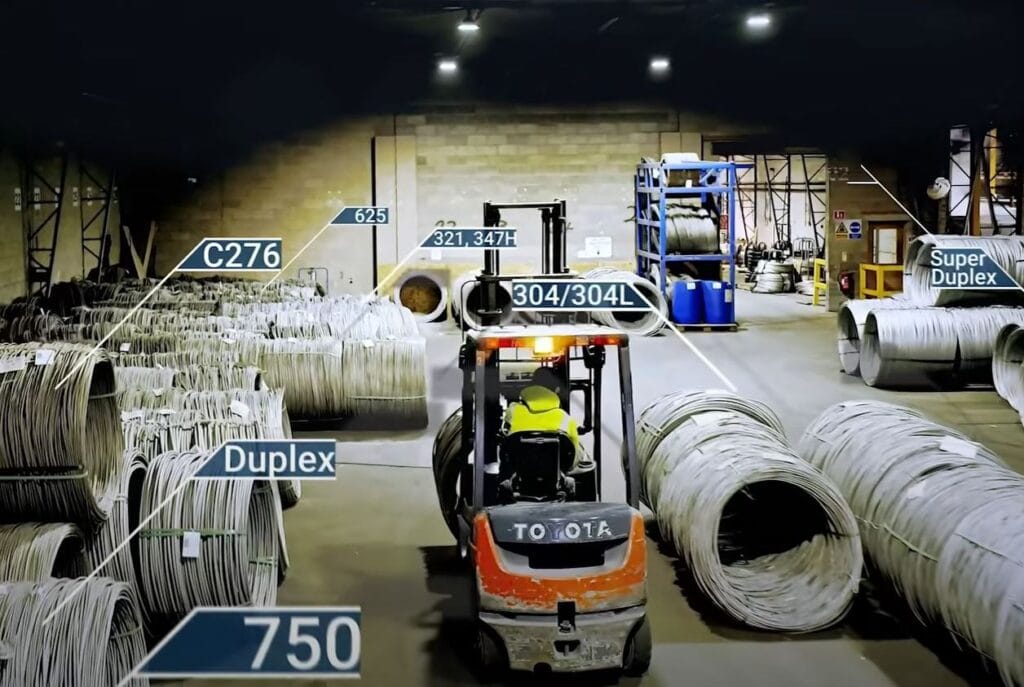
Two Wire products may both be described as Stainless Steel. They may even share similar dimensions and strength requirements. Yet one may form more reliably, resist a particular environment better, tolerate repeated movement longer or perform more predictably at elevated temperatures.
The difference can come from chemistry, grade, temper, cold work, heat treatment, surface condition, construction and the manufacturing process used to create the finished product.
For engineers, purchasers and quality teams, this makes material selection more than a matter of choosing “Stainless,” “Nickel” or “Galvanized.”
The useful question is:
Which material properties matter most in this application—and how will manufacturing change those properties before the product reaches service?
That question is the focus of this guide.
Material Selection Starts With Five Questions
1. What environment will it operate in?
Consider:
- Temperature
- Moisture
- Saltwater
- Chemicals
- Pressure
- Cleaning agents
- Outdoor exposure
- Contamination requirements
2. What does the product physically need to do?
Does it need to:
- Carry load
- Bend repeatedly
- Form into a spring
- Weld into another component
- Conduct electricity
- Generate heat
- Resist abrasion
- Maintain dimensional stability
- Feed through automated equipment
3. How will it be manufactured?
Will the material be:
- Drawn
- Formed
- Coiled
- Welded
- Machined
- Ground
- Swaged
- Crimped
- Coated
- Stranded
- Heat treated
4. Which failure mode matters most?
The biggest concern may be:
- Corrosion
- Fatigue
- Fracture
- Wear
- Deformation
- Poor forming
- Weld failure
- Loss of strength
- Dimensional variation
5. What happens if the material is wrong?
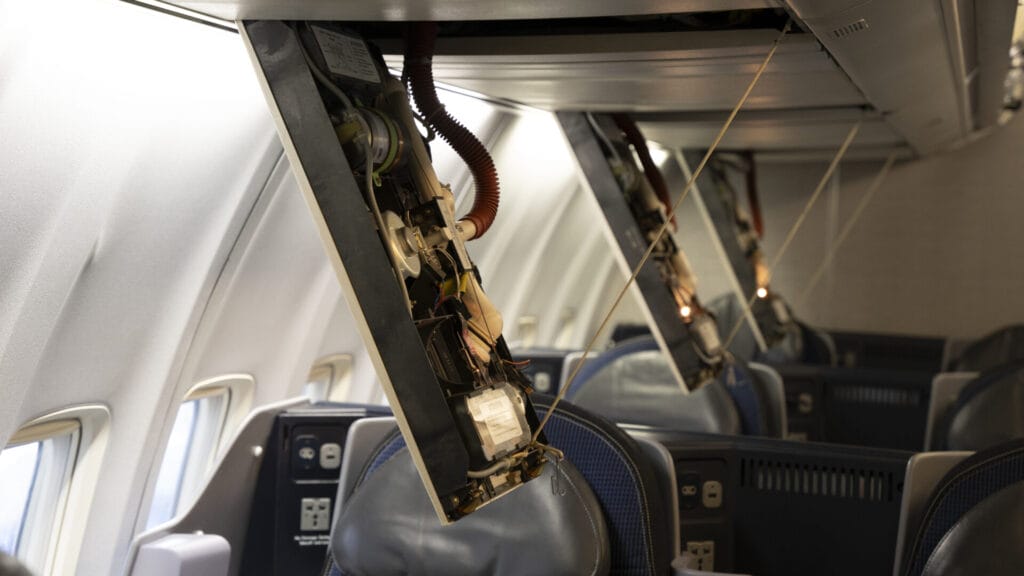
A component that can be replaced in minutes presents a very different sourcing risk from material installed in an aircraft system, downhole application, medical device or difficult-to-access industrial assembly.
Material selection should reflect both performance requirements and consequences of failure.
Eight Common Questions About Materials and Metallurgy
- Are all Stainless Steels essentially the same?
No.
“Stainless Steel” describes a broad family of corrosion-resistant alloys rather than one universal material.
Different grades may provide different combinations of:
- Corrosion resistance
- Strength
- Ductility
- Formability
- Weldability
- Temperature resistance
- Magnetic response
- Fatigue behaviour
- Work-hardening characteristics
Even within a single product category, manufacturers may offer several Stainless grades.
For example, Loos & Co. offers Stainless Cable products in alloys including 302/304, 305 and 316, depending on the construction and product. Its broader Rope & Assemblies capabilities also include specialty materials such as 2205, Monel® and Inconel®.
The correct question is therefore not simply, “Do we need Stainless?”
It is, “Which Stainless grade provides the properties this application actually needs?”
- When does material grade really matter?
Grade selection becomes increasingly important when the product encounters:
- Corrosive environments
- Elevated temperature
- Repeated loading
- High forming demands
- Saldatura
- Pressure
- Tight dimensional requirements
- Difficult maintenance access
- Mission-critical service
In a relatively forgiving application, several grades may provide acceptable performance.
As the operating window narrows, the differences between grades become more significant.
- How should engineers choose the right material?
Start with the operating requirements rather than a preferred alloy.
Define:
- Environment
- Temperature
- Load
- Movement
- Manufacturing process
- Required service life
- Inspection requirements
- Consequences of failure
Only then should candidate materials be compared.
Selecting the material first and trying to make the application fit it reverses the process.
- How does material selection affect long-term performance?
Material selection can influence:
- Corrosion rate
- Fatigue life
- Wear
- Creep
- Dimensional stability
- Surface degradation
- Crack initiation
- Spring behaviour
- Weld integrity
- Electrical performance
However, material is only one contributor.
A suitable alloy can still experience shortened service life if the product is poorly processed, installed incorrectly or operated outside its intended environment.
- Why does metallurgy matter to buyers?
Metallurgy explains why materials with similar names or chemistry can behave differently.
Characteristics including:
- Grain structure
- Cold work
- Heat treatment
- Hardness
- Tensile strength
- Yield strength
- Ductility
- Surface condition
can change the way a product forms, bends, welds or resists fatigue.
Central Wire’s technical capabilities include metallurgical analysis, application recommendations, process improvement and root-cause identification, alongside processes such as Wire drawing, annealing and surface treatment.
The alloy designation is therefore only one part of the material story.
- When should one type of Wire be used over another?
The answer depends on function.
For example:
- Filo per molle prioritizes controlled mechanical response and repeatable forming.
- Filo per saldatura must support the base material, welding process and finished joint.
- Filo di resistenza is selected around electrical and thermal performance.
- Linea di fettucce must operate over long lengths in demanding downhole environments.
- Filo sottile may require very small dimensions, controlled surfaces and careful handling.
- Cable and Strand add construction, flexibility and fatigue considerations to the material decision.
The product family should be selected around the task the material must perform.
- What affects service life besides the alloy?
Product lifespan can also be influenced by:
- Surface condition
- Heat treatment
- Coating
- Cable construction
- Bend radius
- Operating load
- Vibration
- Installation
- Maintenance
- Manufacturing consistency
- Environmental exposure
This is why simply upgrading to a “better” alloy does not always increase service life.
The limiting variable may exist elsewhere in the system.
- Which matters more: material or manufacturing process?
Neither can be evaluated independently.
The correct material processed incorrectly can underperform.
The wrong material cannot be transformed into the correct one simply through better manufacturing.
Performance depends on material + process + application working together.
Stainless Steel Is a Family, Not a Single Material
Stainless Steel is one of the most widely used industrial material families because it can provide useful combinations of corrosion resistance, strength, manufacturability and surface performance.
But one Stainless grade should not automatically be substituted for another.
302 and 304
302 and 304 are closely related austenitic Stainless grades and are widely used in Wire, Cable and other industrial products.
They provide a useful combination of:
- Corrosion resistance
- Strength
- Ductility
- Formability
- Availability
Loos & Co. identifies 302/304 as its most common Stainless material across several Strand, Cable, Aircraft Cable, Wire Rope and Coated Cable products.
That widespread use does not mean 302/304 is automatically appropriate for every Stainless application.
The environment and required mechanical response still matter.


Where 305 Stainless Can Fit
305 Stainless is another austenitic Stainless grade used in certain Wire and Cable products.
One of its useful characteristics is its comparatively lower tendency to work harden during forming than some related grades.
That can matter when the material undergoes substantial forming or fabrication.
Loos & Co. offers 305 in selected Cable constructions alongside 302/304 and 316.
This illustrates an important point for buyers:
Two Stainless products can occupy the same general category while being selected for different manufacturing or performance reasons.
Where 316 Stainless Changes the Conversation
316 Stainless is often considered when corrosion exposure becomes more demanding, particularly where chlorides or marine-type conditions may be involved.
That additional environmental resistance can make it attractive for:
- Marine systems
- Process equipment
- Chemical exposure
- Outdoor applications
- Certain food-processing environments
- Other corrosion-sensitive applications
Loos & Co. offers 316 Stainless across selected Strand, Aircraft Cable, Wire Rope and Coated Cable configurations.
But selecting 316 should still involve a complete performance review.
In Loos & Co.’s published Cable data, comparable constructions in 302/304 and 316 can have different minimum breaking strengths. For example, material choice and mechanical requirement should therefore be evaluated together rather than assuming that improved corrosion performance automatically means improved strength.
When Stainless Steel Is Not the Complete Answer
Some applications push beyond the performance range of conventional Stainless grades.
They may require:
- Higher temperature resistance
- Different corrosion performance
- Greater high-temperature strength
- Different electrical properties
- Specific magnetic characteristics
- More demanding mechanical performance
This is where Nickel and other specialty alloys become relevant.
Central Wire manufactures products using Stainless, Nickel, Copper and other specialty alloy systems, while its aerospace-focused Bar & Cold Heading range includes materials such as A286, Inconel® 600, 625 and 718, Monel® 400 and K500, and X-750 alongside numerous Stainless grades.
Again, the goal is not to select the most exotic material available.
It is to select the material whose properties justify its use in the application.
Metallurgy: Why the Alloy Name Is Only the Beginning
A material specification establishes chemistry and other important requirements.
Manufacturing then changes the material.
To understand the finished Wire, it helps to think about a chain:
Chemistry → Microstructure → Processing → Properties → Performance
Each stage influences the next.
Chemistry Establishes the Starting Point
Alloying elements influence characteristics such as:
- Corrosion resistance
- Strength
- Hardenability
- Oxidation behaviour
- Electrical properties
- Formability
- Temperature capability
However, chemistry alone does not determine the final product.
Two pieces of material with compliant chemistry can still exhibit different mechanical properties because they were processed differently.
Cold Working Changes the Material
Wire drawing is a cold-working process.
As material is pulled through progressively smaller dies, its cross-sectional area decreases.
That deformation changes its mechanical condition.
Depending on the material and amount of reduction, cold work can:
- Increase strength
- Increase hardness
- Reduce ductility
- Change forming behaviour
This matters because a Wire product may need very different properties depending on its next operation.
Material destined for further forming may require more ductility.
Spring applications may need considerably different mechanical properties.
The correct final condition therefore depends on what happens next.
Heat Treatment Can Reset or Modify Those Properties
Annealing may be used during Wire manufacturing to restore ductility or establish a required material condition.
Central Wire lists both annealing and stress relieving among its Wire-manufacturing capabilities, along with wet and dry drawing and other material-processing operations.
The relationship between drawing and heat treatment helps explain why specifying only alloy and diameter may leave important information undefined.
The same alloy can be supplied in substantially different mechanical conditions.
Temper Matters
Temper describes the material condition created through mechanical or thermal processing.
It can influence:
- Strength
- Hardness
- Ductility
- Formability
- Spring response
- Straightening
- Cutting
- Lavorazione meccanica
This is especially important in Wire because the drawing process itself can create major changes in the material’s mechanical properties.
A customer purchasing material for a forming operation should therefore consider not only what alloy it is, but also what condition it is in when it reaches the machine.
Surface Condition Matters More Than It Looks
The surface represents a small portion of the material, but it is where the product interacts with:
- Utensili
- Guides
- Feed systems
- Pulleys
- Chemicals
- Coatings
- Weld processes
- Other components
Surface condition can therefore affect:
- Friction
- Feeding
- Forming
- Tool wear
- Corrosion
- Fatigue
- Weld cleanliness
- Coating adhesion
This is one reason Central Wire’s manufacturing process begins with Wire-rod preparation methods that include cleaning and surface treatments such as etching, pickling and coating.
A material can have the correct chemistry and mechanical properties while still creating production problems if its surface condition does not suit the process.
Material Selection by Function
Instead of choosing materials by industry alone, it can be useful to compare them according to what the product actually does.
When the Product Must Behave Like a Spring
Spring applications require material that can:
- Be formed predictably
- Store mechanical energy
- Recover repeatedly
- Maintain geometry
- Resist fatigue
Important considerations can include:
- Lega
- Tensile strength
- Wire diameter
- Surface quality
- Temper
- Coating or lubricant
- Heat treatment
A material that is corrosion resistant but difficult to form consistently may still be the wrong choice for the spring-manufacturing process.
When the Product Becomes Part of a Weld
Welding Wire must support two systems simultaneously:
The welding process e the finished structure.
Material selection needs to account for:
- Base metal
- Filler chemistry
- Welding method
- Joint geometry
- Corrosion environment
- Temperature
- Required mechanical properties
The correct material must feed and weld consistently while also contributing the required properties to the finished joint.
That is a very different selection problem from choosing Wire for a spring or mechanical Cable.
When the Wire Is Supposed to Generate Heat
Resistance Wire is intentionally selected for electrical resistance.
That changes the material-selection priorities.
Relevant characteristics can include:
- Electrical resistivity
- Operating temperature
- Oxidation behaviour
- Wire diameter
- Thermal cycling
- Mechanical stability
In this case, electrical and thermal properties may outweigh the priorities that dominate structural applications.
When the Product Goes Downhole
Downhole Wire must operate under conditions that are difficult to reproduce in ordinary industrial settings.
Potential requirements include:
- Long continuous lengths
- Corrosion resistance
- Tensile performance
- Dimensional consistency
- Pressure
- Temperature
- Sour or sweet well conditions
- Reliable winding and retrieval
Material selection therefore becomes inseparable from the well environment.
An alloy that performs acceptably in atmospheric service may be unsuitable once the chemical and mechanical conditions change.
When Wire Becomes Cable
Material selection continues to matter after individual Wire is stranded into Cable.
But another major variable is introduced:
construction.
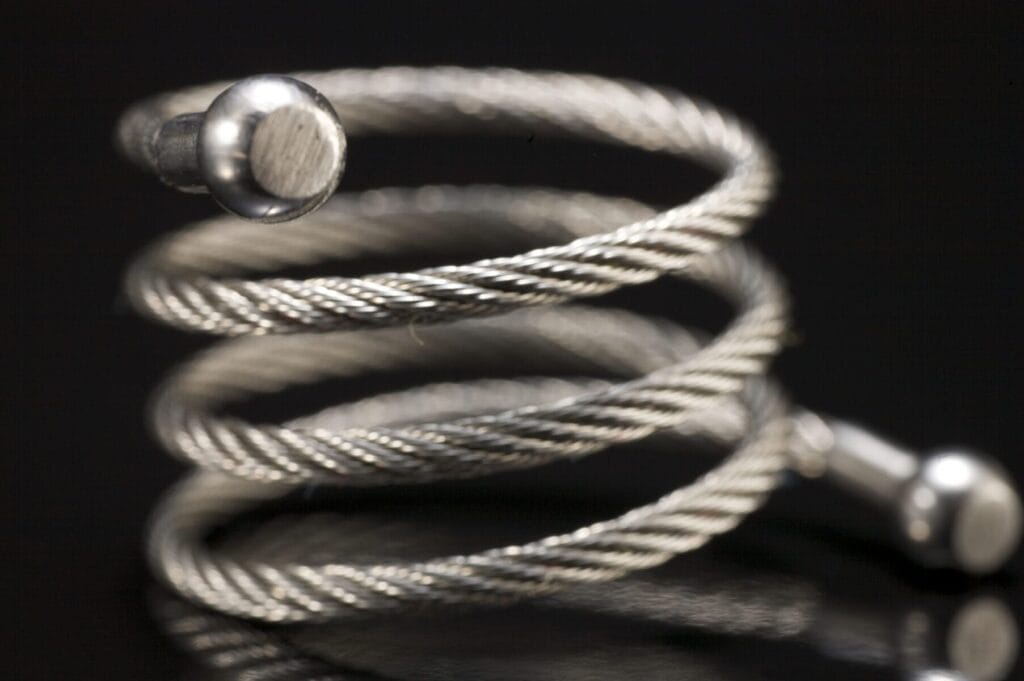
For example, Loos & Co. supplies Stainless Cable in constructions such as 1×7, 7×7 and 7×19.
The construction changes the product’s behaviour.
Loos describes its 1×7 Strand as relatively stiff and low stretch, while 7×19 Cable is used where flexibility and fatigue are greater concerns.
This is a good example of why material and product design cannot be separated.
The same Stainless family can behave very differently once it is arranged into a different Cable construction.
Material Grade Versus Product Construction
Consider two questions:
Which alloy should we use?
e
Which product construction should we use?
They answer different problems.
The alloy can influence:
- Corrosion
- Strength
- Temperature performance
- Formability
- Surface behaviour
The Cable construction can influence:
- Flexibility
- Fatigue
- Stretch
- Handling
- Movement
Selecting the right alloy but wrong construction can still create an unsuitable product.
Material Versus Process: Which Matters More?
This is ultimately a false choice.
Material determines the potential performance range.
Manufacturing determines whether that potential is achieved consistently.
Consider a suitable Stainless alloy that is:
- Drawn incorrectly
- Heat treated incorrectly
- Damaged at the surface
- Poorly stranded
- Contaminated before welding
- Coated inconsistently
- Packaged incorrectly
The alloy may have been correct while the final product still underperforms.
Now reverse it.
A manufacturer may have excellent process control, but if the selected material lacks the corrosion resistance or temperature capability required by the application, precise manufacturing cannot overcome that fundamental mismatch.
The strongest product decisions therefore consider three things simultaneously:
Materiale
Is the alloy appropriate?
Process
Is the material being processed into the required condition consistently?
Application
Will that finished condition survive the actual operating environment?
Material + Process + Application = Performance
Why Two Products With the Same Grade Can Still Behave Differently
This is one of the most useful concepts for technical buyers.
A grade designation does not completely define the finished product.
Two products made from nominally the same alloy may differ in:
- Tensile strength
- Hardness
- Temper
- Surface finish
- Dimensional tolerance
- Cold-work history
- Heat treatment
- Coating
- Straightness
- Cast and helix
- Cable construction
- Imballaggio
This can explain why switching suppliers based on alloy and diameter alone sometimes produces unexpected results.
The previous material may have possessed characteristics that supported the customer’s process but were never formally documented.
When qualifying an alternate source, buyers should determine which properties are actually important to production—not merely which ones appear on the original purchase order.
Material Selection and Long-Term Product Life
A common temptation is to ask:
“How long will this material last?”
There is rarely one useful answer without application context.
Service life depends on how several variables interact.
Environment
Corrosion, chemicals and temperature can gradually reduce material capability.
Load
A product operating continuously near its design limit may behave differently from one that experiences modest loading.
Movement
Repeated bending and vibration introduce fatigue mechanisms that static strength values do not fully describe.
Surface Condition
Scratches, corrosion pits or tooling damage can become locations where cracking begins.
Costruzione
Cable flexibility and fatigue performance depend partly on the number, size and arrangement of individual Wires.
Installation
Alignment, tension and bend radius can materially change the stresses the product experiences.
Maintenance
Lubrication, inspection, cleaning and replacement intervals may influence usable service life.
Material selection establishes the foundation.
The system around the material determines how that foundation is used.
The Strongest Material Is Not Automatically the Best Material
Engineering decisions frequently involve trade-offs.
Increasing one property can affect another.
A material selected primarily for strength may offer less formability.
A highly flexible Cable construction may have different strength characteristics than a stiffer construction.
A specialized corrosion-resistant alloy may have different availability, manufacturing behaviour or cost.
A tighter material specification may improve process consistency while adding production complexity.
The goal is not:
Maximum strength.
or
Maximum corrosion resistance.
or
Tightest tolerance.
The goal is:
Enough of the correct properties to produce reliable performance in the intended application.
That distinction prevents both under-specification and unnecessary over-engineering.
A Practical Material Selection Framework
Before specifying a Wire, Cable, Bar or Assembly material, work through these six categories.
- Environment
Document:
- Temperature
- Moisture
- Saltwater
- Chemicals
- Pressure
- Cleaning
- Indoor/outdoor conditions
- Mechanical Requirements
Determine:
- Normal load
- Maximum load
- Static or cyclic loading
- Fatigue requirements
- Flexibility
- Hardness
- Strength
- Ductility
- Manufacturing Requirements
Identify whether the material will be:
- Formed
- Coiled
- Welded
- Cut
- Machined
- Ground
- Crimped
- Swaged
- Coated
- Dimensional Requirements
Define:
- Diameter
- Profile
- Tolerance
- Straightness
- Finished length
- Coating thickness
- Assembly dimensions
- Quality Requirements
Determine whether the customer needs:
- Material certification
- Lot traceability
- Mechanical testing
- Chemistry
- Corrosion testing
- Electrical testing
- Non-destructive testing
- Industry approvals
Central Wire’s multi-site ISO 9001 registration covers the manufacture and distribution of round, stranded and shaped Stainless, Nickel, Copper, Zinc and other alloy Wire and Bar products, while specific facilities also hold additional certifications for markets including Aerospace and Medical.
- Business Requirements
Do not overlook:
- Availability
- Lead time
- Minimum quantity
- Repeatability
- Supply continuity
- Imballaggio
- Cost of replacement
- Cost of failure
The technically ideal material on paper is not necessarily the best sourcing solution if it cannot be supplied consistently in the form, quantity and condition the operation requires.
When Should You Talk to a Metallurgist or Technical Supplier?
Not every material decision requires extensive technical review.
Additional expertise becomes particularly useful when:
- A product is repeatedly failing
- Existing materials are corroding
- Service temperature is increasing
- The application involves unusual chemicals
- Forming behaviour varies between lots
- A new material is replacing an established grade
- A specification permits several alloy options
- Heat treatment materially affects performance
- The product is mission-critical
- Material must meet multiple standards
- The customer is moving from a standard to custom product
- The cause of poor performance is unclear
Central Wire states that its technical-services staff includes metallurgists and technologists who support application recommendations, process improvement, metallurgical analysis and root-cause identification.
The value of technical support is not simply recommending a more expensive alloy.
Sometimes the correct recommendation is that the current alloy is suitable and another variable needs attention.
Material Selection Across the Central Wire Group of Companies
The Central Wire Group of Companies works across a broad range of material and finished-product requirements.
Central Wire manufactures round, shaped and specialty Wire and Bar products in Stainless, Nickel, Copper and other alloys across multiple sizes, tempers and end-use requirements.
Its manufacturing capabilities include:
- Wire drawing
- Annealing
- Stress relieving
- Surface preparation
- Coating
- Straightening
- Centerless grinding
- Testing
- Customized packaging
Loos & Co.’s Rope & Assemblies operations extend these material decisions into:
- Strand
- Aircraft Cable
- Wire Rope
- Cavo rivestito
- Gruppi di cavi
- Medical Cable and Strand
- Specialty assemblies
- Precision-manufactured components
Its Stainless Cable offerings include several alloy options across different constructions, while Galvanized Steel and specialty alloy products provide additional material choices where application requirements change.
The important connection is that material selection does not stop when the alloy is chosen.
The Wire must still be drawn, processed, stranded, coated, machined or assembled into the condition required by the application.
A Buyer’s Material Selection Checklist
Before approving a material specification, ask:
- What does the product need to do?
- What environment will it operate in?
- What is the normal operating temperature?
- What are the maximum environmental extremes?
- Is corrosion a significant concern?
- Which chemicals may contact the product?
- Does the product carry static or repeated loads?
- Is fatigue more important than static strength?
- Does the material need to bend or flex?
- Will it be formed after purchase?
- Will it be welded?
- Will it be machined or ground?
- Which mechanical properties are actually critical?
- Does temper matter to the downstream process?
- Is surface condition functionally important?
- Does a coating need to be considered?
- Are tight dimensional tolerances necessary?
- Would a different Cable construction change performance?
- Are there required industry specifications?
- What traceability is necessary?
- How will the material be tested?
- Does packaging affect production?
- What happens if the material fails?
- Has the selected grade been evaluated against the real application rather than only the drawing?
Final Takeaway: Start With Properties, Not Just Material Names
Material selection is often discussed as though there is one correct alloy for each application.
Industrial systems are rarely that simple.
Stainless Steel itself includes multiple grades with different performance characteristics. Nickel alloys extend the available performance range further. Galvanized Steel, Copper alloys and other specialty materials solve different combinations of mechanical, environmental and manufacturing requirements.
But the alloy is only the beginning.
The finished product is also influenced by:
- Cold working
- Heat treatment
- Temper
- Surface condition
- Dimensions
- Costruzione
- Coating
- Manufacturing control
- Installation
- Operating environment
A material should therefore be selected by working backward from the application:
What must the product survive?
What properties make that possible?
Which material provides those properties?
Which manufacturing process preserves or creates the required condition?
When those questions are answered in that order, material selection becomes much more precise.
The objective is not to specify the most advanced alloy.
It is to specify the material—and the finished condition—that gives the application the best chance of performing reliably over its intended life.